
Views: 0 Author: Site Editor Publish Time: 2025-10-16 Origin: Site


When I started using a LED grow light for my indoor plants, I noticed healthier growth and lower energy bills right away. LED grow lights can save up to 40% more energy than traditional options, which means real savings over time. I love that these lights let me grow plants all year. They use less electricity, give off minimal heat, and help my plants thrive in any season. With benefits like faster growth and stronger plants, I believe LED grow lights are a smart choice for any indoor garden.
LED grow lights save up to 40% more energy than traditional lights, leading to lower electricity bills.
These lights have a long lifespan, lasting between 50,000 and 100,000 hours, reducing the need for frequent replacements.
Full spectrum light from LEDs mimics natural sunlight, supporting healthy growth at all plant stages.
Adjustable wavelengths allow customization for different plant needs, enhancing growth and yield.
LEDs produce minimal heat, allowing closer placement to plants and protecting sensitive species from overheating.
Using LED grow lights enables year-round gardening, free from seasonal limitations and weather dependency.
LED grow lights are eco-friendly, producing less waste and containing no harmful materials like mercury.
The user-friendly design of LED grow lights makes them easy to install and adapt for any indoor gardening space.
When I switched to LED grow lights, I immediately noticed how little energy they used compared to my old lights. LED grow lights use advanced technology to deliver bright light while consuming less power. This means I can keep my indoor garden thriving without worrying about high electricity bills.
Here’s a quick comparison of energy consumption between different types of grow lights:
Light Type | Energy Consumption | Notes |
|---|---|---|
LED | Less power | More energy-efficient for the same output. |
Fluorescent | More power | Consumes more energy for the same output. |
HID | More power | Consumes more energy for the same output. |
I find that this energy efficiency is one of the biggest benefits of grow lights for indoor gardening. I can run my lights for longer periods, which helps my plants grow strong and healthy. Using energy-efficient lighting also means I am making a better choice for the environment.
Because LED grow lights use less electricity, my monthly utility costs have dropped. I used to worry about the impact of running grow lights all day, but now I see real savings on my bills. Over time, these savings add up, making LED grow lights a smart investment for any indoor gardener. The benefits of grow lights go beyond just plant health—they help me save money, too.
One of the main reasons I chose LED grow lights is their long lifespan. Most LED grow lights last between 50,000 and 100,000 hours. In comparison, traditional grow lights like HID or fluorescent bulbs need replacing much sooner. Here’s a table that shows the average lifespan of different grow lights:
Type of Grow Light | Average Lifespan (Hours) |
|---|---|
LED | 50,000 - 100,000 |
HID | 10,000 - 18,000 |
Fluorescent | 7,000 - 15,000 |
With LED grow lights, I don’t have to worry about frequent bulb changes. This is a huge benefit for anyone who wants a low-maintenance indoor garden.
Because LED grow lights last so long, I spend less time and money on maintenance. I can focus on my plants and their growth instead of constantly checking and replacing bulbs. The benefits of grow lights with a long lifespan are clear: less hassle, fewer interruptions, and more time enjoying my indoor garden.
Tip: If you want a garden that runs smoothly with minimal effort, choose LED grow lights for their long-lasting performance and energy efficiency.
I have found that the benefits of grow lights, especially LED options, make indoor gardening easier, more affordable, and more enjoyable.
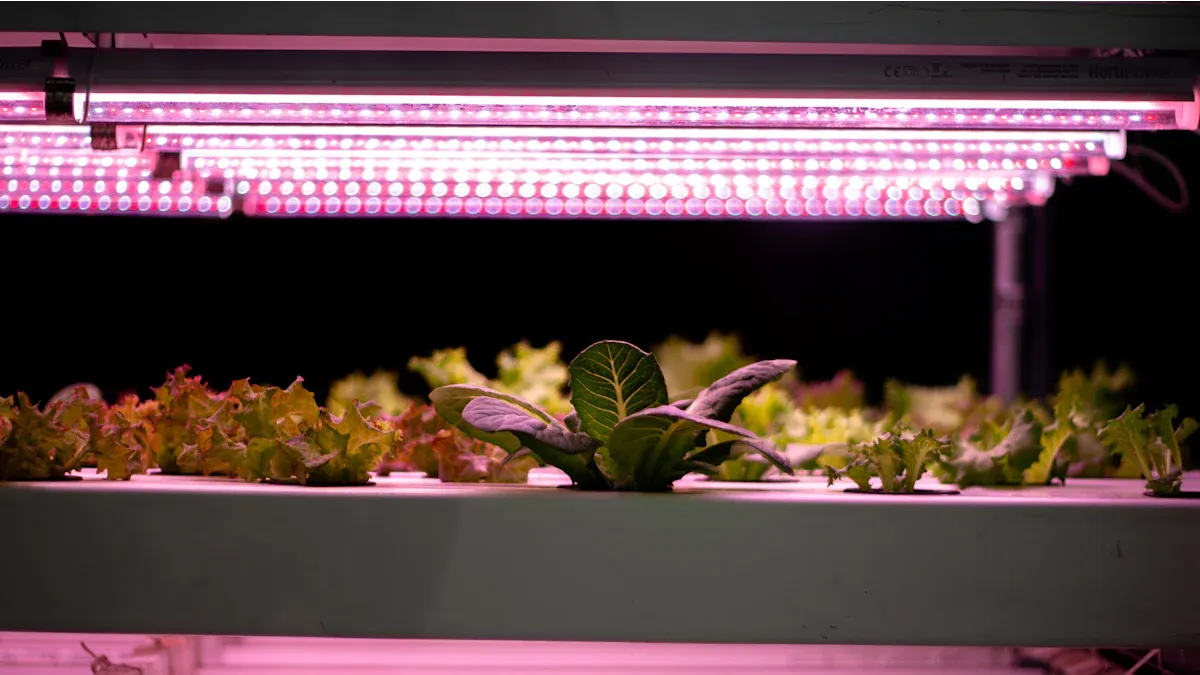
When I first learned about full spectrum light, I realized how important it is for indoor gardening. Full spectrum light mimics the wavelengths found in natural sunlight. This means my plants get the same quality of light indoors as they would outside. I use LED grow lights that produce light from 400 to 700 nanometers, which covers the photosynthetically active radiation range. These lights use phosphor-coated diodes to convert blue light into a wider range of wavelengths. My plants respond well to this light because it matches what they need for healthy growth.
Full spectrum light covers the entire PAR range, which is essential for plant growth.
Blue light in the spectrum promotes compact growth and strong leaves.
Red light in the spectrum triggers flowering and fruiting, helping my plants produce more blooms and fruits.
I see the difference in my plants when I use full spectrum light. They look healthier and grow faster. I know I am giving them the best possible environment.
Full spectrum light supports every stage of plant growth. When I start seeds, the blue wavelengths help them sprout and develop strong roots. As my plants mature, the red wavelengths encourage flowering and fruiting. I adjust the light spectrum to match the needs of my plants at each stage. This flexibility means I can grow herbs, leafy greens, and flowering plants all year.
Note: I always check the growth stage of my plants before adjusting the light spectrum. This helps me provide the right light for each phase.
I love that LED grow lights offer adjustable wavelengths. Different plants have different plant growth needs. I can tailor the light spectrum to match the requirements of each species. For example, I use more blue light for leafy greens and more red light for tomatoes and peppers. Research shows that red light helps plants develop their photosynthetic apparatus and produce phytochemicals. Blue light aids in chloroplast development and regulates stomatal opening, which boosts chlorophyll and anthocyanin production. Adding green light to the mix improves leaf growth and photosynthetic activity, especially in plants like lettuce.
I find that customizing the light spectrum leads to faster growth and healthier plants. The customizable light spectrum lets me optimize yield at every phase. I adjust the intensity and duration of the light to match the changing needs of my plants. This flexibility makes indoor gardening more successful.
LED grow lights enhance yield by optimizing the light spectrum, intensity, and duration.
Customization leads to faster growth and healthier plants.
Different growth stages benefit from specific light spectrums.
The flexibility of LED grow lights allows me to match the changing needs of my plants.
I enjoy watching my plants thrive under a customizable spectrum. It gives me control over their environment and helps me achieve better results.
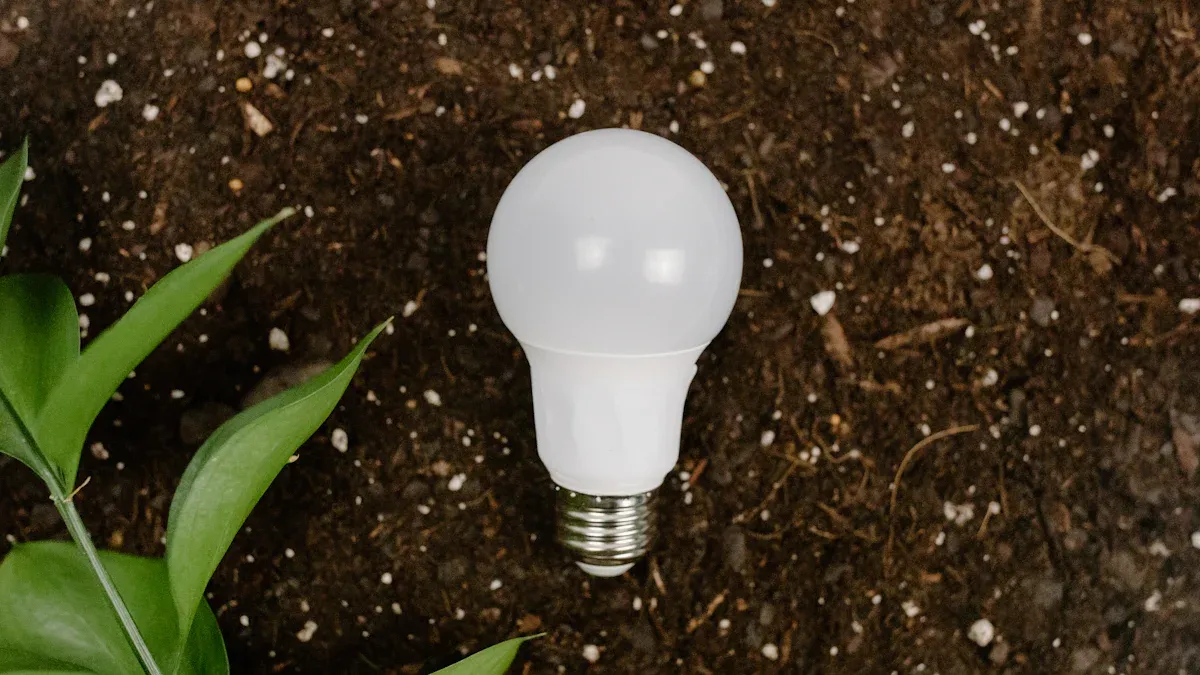
One thing I noticed right away when I started using led grow lights is how little heat they produce. I can place these lights much closer to my plants without worrying about burning the leaves. This is a big advantage, especially for small spaces or shelves where every inch counts. When I use traditional lights, I have to keep them farther away to avoid overheating. With LEDs, I can set the lights just a few inches above my plants. This helps my plants get more light and grow stronger.
Some of my favorite plants are very sensitive to heat. Orchids, ferns, and rare tropicals can suffer if the temperature gets too high. I feel confident using LED lights because they keep the growing area cool. Here’s a quick look at how these lights help protect delicate plants:
Safety Advantage | Description |
|---|---|
Low Heat | LED grow lights emit minimal heat, preventing temperature-related damage to sensitive plants. |
They consume less energy, leading to lower costs and a smaller environmental footprint. | |
Reduced Pest and Disease Risk | Lower heat output minimizes pest attraction and fungal disease risks, promoting healthier plants. |
I see fewer signs of stress and disease in my sensitive plants since switching to LEDs. The cooler environment keeps them healthy and vibrant.
A stable environment is key for healthy indoor plants. I find that LED lights help me keep temperature and humidity levels steady. When I use lights that give off too much heat, I have to adjust my fans and vents all the time. With LEDs, I spend less time worrying about sudden changes.
LED lights help me save energy, which keeps my utility bills predictable.
I can adjust the light spectrum to match what my plants need, making sure they always get the right kind of light.
I use timers to control how long the lights stay on, so my plants get the perfect amount of light each day.
Good airflow and proper cooling help me manage humidity and temperature, which keeps the growing space comfortable.
I learned that plants grow best when the temperature stays between 80 and 85°F. This range supports photosynthesis and helps my plants absorb nutrients. When the air is warm, my plants transpire more, which means they take up water and nutrients better. Keeping the right temperature also helps me reach the ideal vapor pressure deficit, which is important for healthy growth.
Tip: If you want to grow rare or sensitive plants indoors, choose LED lights for their low heat and stable performance. Your plants will thank you with lush leaves and bright blooms.
I enjoy indoor gardening because I can grow plants any time of the year. When I use a led grow light, I do not worry about cloudy days or short winter sunlight. I control the light my indoor plants receive, so I never depend on the weather. I adjust the light spectrum and intensity to match what my plants need. This flexibility lets me mimic spring, summer, or fall conditions inside my home.
I notice that my plants keep growing strong even when it is cold outside. I set the timer for my led grow lights, and my plants get the right amount of light every day. I see new leaves and flowers appear, no matter the season. I do not have to wait for spring to start new seeds or see my favorite flowers bloom. Indoor gardening with grow lights gives me freedom from seasonal limits.
LED grow lights provide the ability to adjust the light spectrum, which can be customized for different plant growth stages. This adaptability, combined with precise control over light intensity and duration, allows growers to replicate seasonal changes, thus facilitating year-round plant growth.
Tip: I always check my plants for signs of growth and adjust the light settings to keep them healthy all year.
I started indoor gardening in a small apartment. I did not have much natural light, but I wanted to grow herbs and flowers. I chose led grow lights because they work well in any space. I place them on shelves, tables, or even in corners where sunlight does not reach. My indoor plants thrive because they get the light they need for photosynthesis.
Here are some reasons why led grow lights help me grow plants in any space:
LED grow lights provide the necessary light spectrum for photosynthesis, which is crucial for plant growth.
They mimic natural sunlight, making them effective in spaces with limited natural light.
These lights can be tailored to different growth stages of plants, ensuring optimal conditions for healthy development.
I use different sizes and shapes of grow lights to fit my space. Some are small and perfect for a single pot. Others cover a whole shelf of plants. I find indoor gardening easy because I do not need a big window or a greenhouse. I create a garden anywhere I want.
I enjoy watching my indoor plants grow in places that used to be dark and empty. My kitchen, living room, and even my hallway now have fresh greenery. Indoor gardening with led grow lights turns any space into a healthy, vibrant garden.
Note: I always measure my space before setting up new grow lights. This helps me choose the right size and number of lights for my indoor gardening project.
When I started using a led grow light, I noticed my indoor plants became greener and stronger. The right light spectrum helps plants perform photosynthesis more efficiently. I learned that blue and white LEDs play a big role in this process. Blue light supports photosystem activity, while white LEDs boost overall plant health. I found a study showing that white LEDs can increase photosynthetic efficiency by 30%. Colored LEDs also help, giving a 25% boost in biomass and better fruit development.
Study Title | Findings | Light Type | Photosynthesis Impact |
|---|---|---|---|
Reaching Natural Growth | Minimum 7% blue light needed for activity | Blue and Red LEDs | Enhances photosynthetic efficiency |
Are White LED Grow Lights the Secret to Thriving Indoor Plants? | 30% greater efficiency with white LEDs | White LEDs | Boosts plant health and growth |
Are White LED Grow Lights the Secret to Thriving Indoor Plants? | 25% boost in biomass with colored LEDs | Colored LEDs | Enhances growth and fruit development |
I see the difference in my plants every day. Their leaves look fuller, and their stems stand tall. Enhanced photosynthesis and growth mean my plants get the energy they need to thrive.
I noticed that my seedlings developed sturdy stems and strong roots when I used led grow lights. Blue light is especially important for leafy growth and root strength. Red light helps during flowering and fruiting stages. Here is a quick look at how different light types support plant health:
Light Type | Wavelength (nm) | Benefit |
|---|---|---|
Blue Light | 400-500 | Promotes leafy growth and strong roots |
Red Light | 600-700 | Essential for flowering and fruiting |
Seedling Stage: Blue light helps roots grow deep and stems stay firm.
Vegetative Stage: More blue light leads to lush leaves.
Flowering Stage: Red light encourages flowers and fruit.
I see taller plants, larger leaves, and better root systems in my indoor garden. My plants look healthier and resist stress better.
I always wanted more flowers and fruits from my indoor plants. Led grow lights make this possible. Red LEDs are crucial during the flowering phase. They simulate warm sunlight, which encourages flower and fruit production. Blue and red lights together improve photosynthesis during fruiting, helping fruits mature faster.
Red LED lights encourage flower and fruit production.
Blue and red lights improve fruit development and maturity.
Side-by-side growing tests show that LED systems can produce yields 25% higher than traditional methods. I saw my harvest increase from 2.01 lbs to 2.53 lbs per light. This boost in productivity, along with energy savings, makes led grow lights a smart choice.
I noticed more blooms and bigger fruits after switching to led grow lights. Here is a table showing how different light types affect plant growth:
Light Type | Effect on Plants |
|---|---|
Blue (400–500 nm) | Promotes strong leaves and stems |
Red (600–700 nm) | Essential for flowering and fruiting |
Green and Far-Red | Important for full development |
Led grow lights can lead to taller plants, larger leaves, and improved root systems.
Yields are generally higher compared to natural sunlight or traditional bulbs.
I enjoy seeing my indoor plants produce more flowers and fruits. The stable environment and targeted light spectrum help me grow healthy, productive plants all year.
Tip: I always check my plants for signs of new growth and adjust the light settings to support more blooms and fruits.
When I switched to LED grow lights, I noticed a big difference in my monthly bills. These lights use much less electricity than traditional options. I saw my energy costs drop, which made indoor gardening more affordable for me. Many growers experience similar savings because LEDs use up to 75% less energy than incandescent bulbs and about 40% less than HID lights. Some utility companies even offer rebates for switching to LED technology, which helps lower the initial investment.
Here is a comparison of costs over five years:
Aspect | HPS Setup | LED Setup |
|---|---|---|
Fixture Cost | $150,000 | $300,000 |
Energy Use | 1,000 kWh per day | 600 kWh per day |
Annual Bulb Replacement | $30,000 | Negligible over 5 years |
Cooling Costs | $25,000 annually | $10,000 annually |
5-Year Total Cost | ~$600,000 | ~$500,000 |
Total Savings Over 5 Years | N/A | $100,000 |
I realized that, even though the initial cost for LEDs can be higher, the long-term savings are clear. Lower energy use and fewer replacements mean I spend less money over time. This efficiency makes LED grow lights a smart choice for anyone who wants to save money while caring for their plants.
I care about the environment, so I want my indoor garden to be as eco-friendly as possible. LED grow lights help me achieve this goal in several ways.
I noticed that I throw away fewer bulbs now. LEDs last much longer than traditional lights, so I do not need to replace them as often. This means less waste goes to the landfill. LEDs are also more recyclable and emit fewer pollutants over time. Traditional lighting systems require more energy and frequent replacements, which leads to more waste and a bigger environmental footprint.
LEDs are more sustainable due to their low energy use and long lifespan.
They are more recyclable and emit fewer pollutants.
Traditional lights create more waste because they need frequent replacement.
Another reason I prefer LEDs is that they do not contain harmful substances like mercury. Some fluorescent lamps have mercury, which can be dangerous if not disposed of properly. I feel safer knowing that my lights are made from non-toxic materials. This makes disposal easier and safer for the environment.
LEDs do not contain mercury or other harmful substances.
Reduced energy use means fewer greenhouse gas emissions.
LEDs are an eco-friendly choice for sustainable plant care.
By using LED grow lights, I support eco-friendly gardening and help protect the planet. I know my choices matter, and I feel good about making a positive impact with my indoor garden.
When I started my indoor garden, I wanted a lighting solution that could adapt as my collection grew. I found that led grow lights fit gardens of any size, from a single pot on a windowsill to a full shelf of plants. The number of plants I can support depends on the light’s size, wattage, and the type of plants I grow. I always make sure to space my plants about 1 to 2 feet apart. This spacing prevents shading and allows for good air flow, which helps each plant get enough light and stay healthy.
I can use small lights for a few herbs or larger panels for rows of leafy greens.
Proper light distribution ensures every plant receives enough energy for growth.
Adjustable setups let me expand or rearrange my garden as needed.
This flexibility makes indoor gardening easy, whether I have a tiny apartment or a spacious room.
I remember feeling nervous the first time I set up my indoor lights. I quickly realized that led grow lights are designed for easy installation. Most models come with simple mounting options, and I can adjust the height and angle as my plants grow taller. If I want to add more lights, I just connect them to my existing setup. This modular design lets me change my garden layout without any hassle.
Unlike older lighting systems, which can be bulky and hard to move, led grow lights are lightweight and compact. I do not need special tools or professional help. I can hang them above my plants, attach them to shelves, or even use stands for tabletop gardens. This makes it easy for me to create the perfect lighting arrangement for any space.
I appreciate how user-friendly these lights are, especially as someone who started with little experience. Many led grow lights have features that make them accessible for beginners like me:
Energy efficiency helps me save on electricity.
Long lifespan means I rarely need to change bulbs—some last up to 11 years.
I can select specific wavelengths to match my plants’ needs.
Most systems are designed for easy use, so I do not feel overwhelmed.
Setting up my indoor garden takes just a few steps.
To show how led grow lights compare to traditional options, here is a quick table:
Feature | LED Grow Lights | Traditional Lighting (HID) |
|---|---|---|
Energy Efficiency | High (uses less electricity) | Lower (uses more electricity) |
Heat Production | Low (less cooling needed) | High (more cooling needed) |
Lifespan | Long (rarely needs replacement) | Short (frequent replacements) |
Customizable Spectrum | Yes (adjustable for plant stage) | No (fixed spectrum) |
User Satisfaction | High (easy and preferred) | Moderate (less adaptable) |
I feel confident recommending led grow lights to anyone, even if they are new to indoor gardening. The simple setup and flexible design make it easy to start growing healthy plants right away.
I have seen firsthand how a led grow light can transform indoor plants. These lights deliver the right spectrum for every growth stage, use less energy, and last longer than traditional options. I can adjust them to fit any plant’s needs, which helps me save money and support a greener planet. If you want healthy plants and lower bills, try led grow lights. Start by researching the best models for your space and plant types.
Key benefits:
Customizable light spectrum for better growth
Energy efficiency and long lifespan
Lower maintenance and reduced waste
Plant Type | Recommended Light Distance |
|---|---|
Leafy Greens | 6-12 inches |
Fruiting Plants | 6-12 inches |
Houseplants | 12-24 inches |
Tip: Choose the right light for your garden size and plant type to get the best results.
A LED Grow Light is a special lamp that helps plants grow indoors. I use it to give my plants the right light spectrum, which supports healthy growth when sunlight is not enough.
I find that herbs, leafy greens, flowers, and even fruiting plants like tomatoes thrive under LED Grow Lights. These lights work well for almost any indoor plant that needs extra light.
LED Grow Lights provide a specific light spectrum that matches what plants need for photosynthesis. Regular bulbs light up a room, but they do not support plant growth as effectively.
I usually keep my LED Grow Light 6 to 12 inches above leafy greens and 12 to 24 inches above houseplants. This distance gives my plants enough light without causing stress or burning.
I see faster growth, healthier leaves, and more flowers or fruits. LED Grow Lights use less energy, last longer, and produce less heat than traditional lights.
Most LED Grow Lights last between 50,000 and 100,000 hours. I rarely need to replace them, which saves me time and money.
I check the light spectrum, wattage, and coverage area. I also look for adjustable settings and a long lifespan. These features help me match the light to my plants’ needs.
I set a timer for 12 to 16 hours of light each day. I adjust the height as my plants grow. I watch for signs of healthy growth and change the settings if needed.


 English
