
Views: 0 Author: Site Editor Publish Time: 2025-10-14 Origin: Site


Have you ever wondered if your regular lamp could help your plants thrive? I used to think any bright light would work, but I quickly learned that plants need much more. Plants depend on specific light spectrum and intensity for healthy growth.
Regular room lighting simply cannot compete with these specialised fixtures when it comes to supporting healthy plant growth.
Check out what scientific studies say about light spectrum and intensity:
Study Title | Findings | Light Spectrum/Intensity |
|---|---|---|
LED Illumination for High-Quality High-Yield Crop Growth in Protected Cropping Environments | Blue and red wavelengths are effective for photosynthesis; red light alone can cause 'red light syndrome' | Importance of blue light addition to red light |
Optimizing LED lighting spectra for enhanced growth in controlled-environment vertical farms | Broad-spectrum lighting outperforms narrow-spectrum in plant growth | Comparison of broad-spectrum vs. single/dual-band lighting |
I always recommend a dedicated LED Grow Light for best results. Regular LEDs might keep some shade-loving plants alive, but they cannot match the power of a true grow light.
Not all LED lights are suitable for plant growth. Regular LEDs lack the specific spectrum and intensity that plants need.
Plants thrive on red and blue light. Blue light supports leaf growth, while red light encourages flowering and fruiting.
Full spectrum LED Grow Lights mimic sunlight, providing all necessary wavelengths for healthy plant development at every growth stage.
Light intensity is crucial. Use LED Grow Lights with high PPFD values to ensure your plants receive enough energy for photosynthesis.
Adjust the distance of your LED Grow Light based on the growth stage. Seedlings need less intensity, while flowering plants require more.
Monitor your plants regularly. Adjust light intensity and placement based on their growth and health to prevent issues.
Choose energy-efficient LED Grow Lights to save on electricity bills while providing optimal light for your plants.
Invest in a quality LED Grow Light for long-term success. It will lead to healthier plants and better yields.
When I started growing plants indoors, I quickly realized that not all lights help plants thrive. The secret lies in the spectrum. Plants need specific wavelengths to grow strong and healthy. Red and blue light play a huge role in this process. Blue wavelengths encourage chlorophyll production and help regulate growth. Red wavelengths drive photosynthesis and trigger flowering and fruiting. If you miss out on either, your plants may struggle.
Plants use red and blue light for photosynthesis.
Blue light supports leaf and stem growth.
Red light boosts flowering and fruiting.
The spectrum includes many colors, but plants focus on red and blue light.
I always choose an LED Grow Light that delivers a balanced spectrum. Regular bulbs often lack the right mix. If you want your plants to grow well, you need to provide both red and blue light. Without blue light, leaves can blister and lose their vibrant green color. Without red light, seeds may not germinate, and flowers might never bloom.
Full spectrum lighting changed the way I grow plants. A full spectrum LED Grow Light mimics sunlight, offering all the colors plants need. This means your plants get the right wavelengths for every stage, from seedling to flowering. Full spectrum lights include red and blue light, plus other colors that support overall health.
Tip: Full spectrum LED Grow Lights help plants grow faster and stronger by providing the complete range of light they crave.
If you want lush foliage and vibrant blooms, full spectrum is the way to go. I noticed my plants grew taller and produced more flowers when I switched to full spectrum lighting.
Intensity matters just as much as spectrum. Plants need enough light to grow, not just the right colors. I learned that lumens measure visible light, but PAR (Photosynthetically Active Radiation) tells you how much usable light your plants get. PAR covers the 400-700 nanometer range, which includes red and blue light.
Light Requirement Type | Description |
|---|---|
Bright Light | Direct sunlight for at least half a day, perfect for flowering plants. |
Indirect Bright Light | Great for foliage plants like ivy and philodendrons. |
Light Intensity Levels | Southern windows give the most intense light; northern windows offer the least. |
If you want your plants to grow vigorously, you need to match the intensity to their needs. I use LED Grow Lights with adjustable intensity so I can give my plants exactly what they need.
Light duration also affects plant health. Too little light, and plants grow slowly or become weak. Too much light can stress them. I follow a simple rule: give plants enough light for maintenance, then increase intensity for good growth or commercial results. When I use the right spectrum and intensity, my plants grow stronger, resist disease, and produce more flowers.
Minimum light keeps plants alive.
Good growth needs more intensity and longer duration.
Commercial growth requires the highest light levels.
Choosing the right LED Grow Light with proper spectrum, intensity, and duration makes all the difference. My plants grow faster, look healthier, and bloom more often.
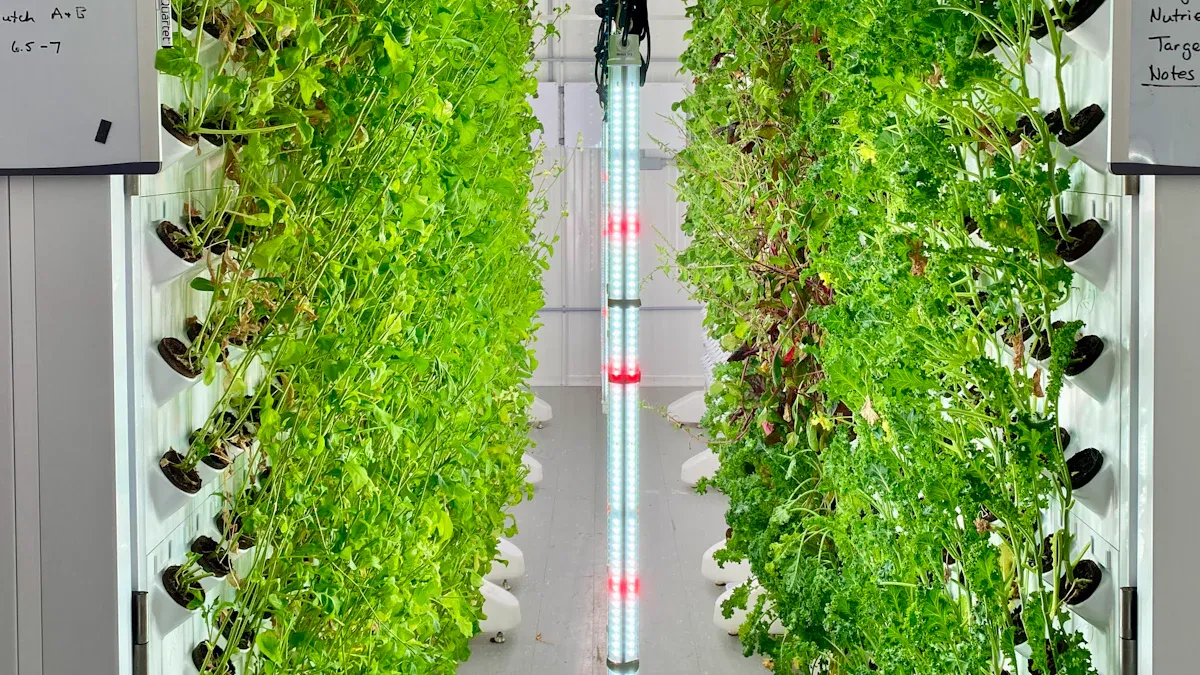
When I first tried growing plants indoors, I used regular LED bulbs from my living room. The results disappointed me. I learned that regular LED lights focus on the colors humans see best, like green and yellow. Plants, however, crave red and blue light for photosynthesis. LED Grow Lights are different. Manufacturers design them to emit light in the photosynthetically active radiation (PAR) range, which covers 400-700 nanometers. This range matches what plants need to grow strong and healthy.
LED Grow Lights target the exact wavelengths plants use, while regular LEDs miss the mark.
If you want your plants to thrive, you need a light source that matches their needs. I always choose an LED Grow Light because it delivers the right spectrum for every stage of growth. Regular LEDs may look bright to our eyes, but they simply do not provide the energy plants require.
Light intensity makes a huge difference in plant growth. I used to think any bright bulb would work, but I quickly realized that plants need much more. Standard LED bulbs usually have low PPFD (Photosynthetic Photon Flux Density) values, often under a few tens of µmol/m²/s. That is not enough for most plants. LED Grow Lights, on the other hand, deliver PPFD values in the optimal range of 400 to 1300 µmol/m²/s. This higher intensity helps plants photosynthesize efficiently and grow faster.
Standard LED bulbs: Low PPFD, not suitable for most plants.
LED Grow Lights: High PPFD, perfect for healthy growth.
Plants need strong, direct light to thrive indoors.
I always recommend using an LED Grow Light if you want lush leaves and vibrant blooms. The difference in intensity is clear. My plants grew taller and produced more flowers when I switched to a proper grow light.
Energy efficiency matters to me, especially when I run lights for hours each day. LED Grow Lights are designed to maximize plant growth per watt. They use smart technology to adjust light intensity based on the time of day or the plant’s growth stage. This means I get better results without wasting energy.
Heat output is another important factor. Regular LED bulbs lack advanced heat dissipation features. They can get hot, which forces me to place them far from my plants. Sometimes, I even need extra fans to keep the temperature down. LED Grow Lights solve this problem. They use advanced aluminum heat sinks and other cooling technologies, reducing heat output by 40-50%. I can place them closer to my plants, giving them more light without risking heat damage.
Type of Light | Heat Output Comparison | Impact on Indoor Plants |
|---|---|---|
LED Grow Lights | Lower heat emissions | Reduces energy needed for cooling and minimizes fire risks. |
Regular LED Lights | Higher heat emissions | Requires more distance from plants and additional ventilation. |
LED Grow Lights keep my growing space cooler and safer. I never worry about overheating or damaging my plants.
If you want to grow healthy plants indoors, choose an LED Grow Light. You will save energy, reduce heat, and give your plants the best chance to thrive. I made the switch, and my results speak for themselves. ��
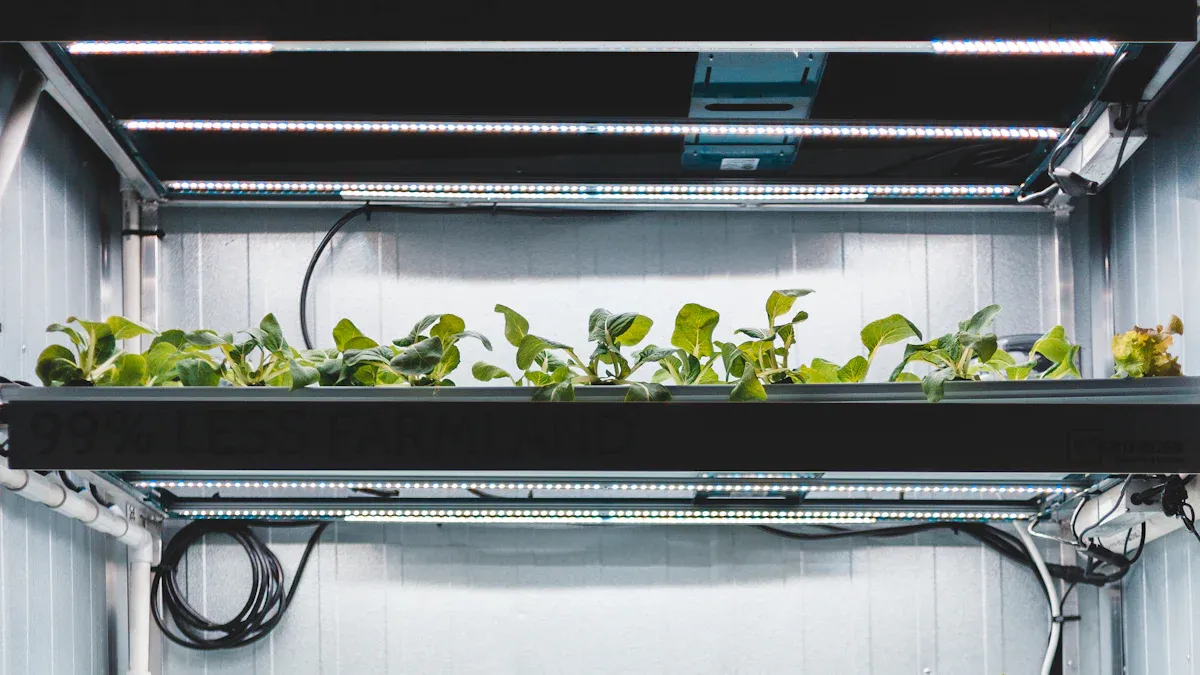
When I started growing plants indoors, I quickly realized that not all lights are created equal. The best LED Grow Light offers a full spectrum of wavelengths, closely mimicking natural sunlight. This means my plants get the right mix of blue, red, and other colors for every stage of growth. I noticed that when I switched to a full spectrum grow light, my seedlings grew faster and my flowers bloomed more vibrantly.
A full spectrum grow light supports all phases of plant development, from germination to harvest.
Let me show you how full spectrum lights compare to targeted spectrum lights:
Feature | Full Spectrum Lights | Targeted Spectrum Lights |
|---|---|---|
Plant Growth Support | Suitable for all growth stages | Optimized for specific growth stages |
Customization | Broad spectrum, less customization needed | Highly customizable for different crops |
Best For | Home gardeners, small-scale growers | Commercial growers focused on yield |
Heat Emission | Generates more heat | Lower heat output |
Lifespan | Good longevity, heat management important | Longer lifespan, efficient heat management |
I always recommend a full spectrum grow light for beginners and home gardeners. It takes the guesswork out of lighting and helps plants thrive.
Plants need different light levels as they grow. Seedlings prefer gentle light, while mature plants need stronger illumination. I use an LED Grow Light with adjustable intensity so I can tailor the brightness to each growth stage. This feature lets me avoid burning young plants and ensures mature ones get enough energy.
I adjust the intensity as my plants grow taller.
My LED Grow Light emits specific wavelengths for each phase.
I modify the settings to match the needs of my crops.
Tip: Adjustable intensity helps prevent weak stems and promotes healthy, robust growth.
Many high-quality LED Grow Lights include smart controls. These allow me to set timers and automate light schedules. I save time and give my plants the best possible care.
Coverage area matters when choosing an LED Grow Light. I always check the manufacturer’s guidelines to make sure my light covers the entire growing space. If I use a light with too small a coverage area, some plants get left in the shade and grow unevenly.
I evaluate my plant’s light requirements before buying.
I calculate the coverage area based on wattage and design.
I space my LED Grow Lights 2-5 meters apart for even distribution.
Uniform light distribution ensures every plant gets the same amount of energy. This prevents patchy growth and helps me achieve a lush, healthy garden.
Note: High-quality LED Grow Lights use advanced chips and design to deliver consistent coverage and low heat output.
When I invest in a good LED Grow Light, I see stronger stems, greener leaves, and more blooms. My plants grow evenly, and I spend less time worrying about dark corners or overheating.
When I first tried indoor plant growing with regular LED bulbs, I wanted to see which plants could survive. I discovered that some species adapt well to lower light levels. These plants do not need intense light, so they can thrive under standard LEDs. I recommend starting with shade-loving varieties if you do not have a dedicated LED Grow Light.
Here are some plants that perform well under regular LED lighting:
Plant Species | Performance under LED Lighting |
|---|---|
Soleirolia soleirolii | Suitable for indoor living walls, performs well under LED lighting |
Spathiphyllum wallisii | Suitable for indoor living walls, performs well under LED lighting |
Spathiphyllum blandum | Efficient CO2 assimilation, adaptable to LED lighting |
I noticed that Spathiphyllum blandum stands out for its ability to assimilate CO2 efficiently, even when light levels are low. If you want to keep your space green without investing in specialized equipment, these plants make a great choice.
Tip: Choose low-light plants for spaces with only regular LED bulbs. You will see better results and healthier growth.
Sometimes, I need a quick solution before I set up my LED Grow Light system. Regular LED bulbs can help in these situations. I use them for short periods, like when I move plants or wait for new grow lights to arrive. Temporary use works best for hardy, shade-tolerant plants.
However, I always consider the risks. Prolonged exposure to certain wavelengths from regular LEDs can affect both plants and people. Here is what I found:
Risk Type | Description |
|---|---|
Blue Light Exposure | Can cause vision discomfort and disrupt sleep cycles if used for long hours. |
Ultraviolet (UV) | May lead to skin damage and premature aging with continuous exposure. |
Infrared (IR) | Produces heat, which can cause discomfort for anyone working near the lights. |
I limit the use of regular LEDs to avoid these problems. I switch to an LED Grow Light as soon as possible. This keeps my plants healthy and my workspace safe.
Note: Use regular LEDs only as a temporary fix. For long-term success, invest in a proper LED Grow Light.
I learned the hard way that regular LED bulbs have serious drawbacks for growing plants. They do not provide the right spectrum or intensity. My plants grew slowly and looked weak. I compared the results with those from my LED Grow Light, and the difference was clear.
Here are the main limitations of regular LED lights:
Limitation | Description |
|---|---|
Inadequate light spectrum | Regular LEDs lack the wavelengths needed for photosynthesis. |
Low light intensity | Most bulbs have low PPFD values, which are not enough for healthy growth. |
Energy inefficiency | Regular LEDs waste up to 98% of their energy, helping plants very little. |
Excessive heat production | Many bulbs get hot, so I must place them far from plants and use extra ventilation. |
Shorter lifespan | Regular LEDs last 15,000 to 50,000 hours, while LED Grow Lights last much longer. |
I always recommend switching to an LED Grow Light for serious indoor plant growing. You will see stronger stems, greener leaves, and more flowers. Regular LEDs might keep a few shade-loving plants alive, but they cannot support vigorous growth.
If you want to succeed at growing plants indoors, choose a light designed for plant health. Your plants will thank you!
When I shop for an LED Grow Light, I always focus on features that make a real difference for my plants. I want the best results, so I follow a checklist that horticulturalists recommend:
Determine Your Plants' Lighting Needs
I research each plant’s specific light requirements. Some need bright, direct light, while others thrive in shade.
Evaluate the Space
I measure my growing area to ensure the LED Grow Light covers every inch. This helps me avoid dark corners and uneven growth.
Focus on Energy Efficiency
I choose lights that deliver strong output but use less power. This saves money on electricity bills.
Consider the Spectrum
I look for full-spectrum LED Grow Lights. These mimic sunlight and support all stages of plant growth.
Check Compatibility and Accessories
I make sure I have the right accessories for easy installation and operation.
Quality of Construction and Durability
I select lights built to last, especially in humid environments.
Tip: A high-quality LED Grow Light pays off with healthier plants and lower long-term costs.
I learned that matching the right LED Grow Light to each plant type is crucial. Different plants need different light distances and intensities. I use this table to guide my setup:
Plant Type | Optimal Distance (inches) |
|---|---|
Herbs | 12-24 |
Flowering Plants | 12-24 |
Vegetables | 12-24 |
High Wattage | 18-24 |
Low Wattage | 12-18 |
I always adjust the distance based on plant sensitivity and room conditions. Temperature and humidity can affect how close I place the light. Sometimes, I move the LED Grow Light a bit higher if my plants show signs of stress. I watch for leaf color and growth speed to fine-tune my setup.
Temperature sensitivity changes the ideal light distance.
Humidity levels can increase plant stress from intense light.
I make small adjustments as needed for the healthiest results.
Note: Matching the right LED Grow Light to your plant’s needs leads to faster growth and better yields.
I know that price matters when choosing an LED Grow Light. I want the best value without sacrificing quality. Many affordable options still meet basic plant growth needs. Here’s what I look for:
Benefit | Description |
|---|---|
Energy Efficiency | Uses less power, which lowers my electricity bills. |
Long Lifespan | Lasts up to 50,000 hours, so I replace bulbs less often. |
Low Emission | Runs cool, so my plants avoid heat stress. |
Improved Plant Growth | Supports healthy photosynthesis and higher yields. |
Optimal Light Spectrum | Offers customizable spectrums for different plants and growth stages. |
Cost Efficiency | The initial price is offset by long-term savings on energy and maintenance. |
Environmentally Friendly | Contains no harmful chemicals and reduces waste through efficiency and longevity. |
I always compare features and reviews before buying. I look for LED Grow Lights that balance cost and performance. Even budget-friendly models can deliver strong, healthy plants if I choose wisely.
Investing in the right LED Grow Light saves money and boosts plant health. I see the difference every time I harvest fresh herbs or enjoy vibrant flowers indoors.
I hear this myth all the time. Many people think any LED will help plants grow. I used to believe it myself. After testing different lights, I saw the truth. Not all LEDs are equal. Some are designed for human vision, not for plant health. When I used a regular LED bulb, my plants looked pale and weak. Only a true LED Grow Light made them thrive.
LED Grow Lights emit balanced and phytoactive light. Regular LEDs do not.
Here’s what I learned about LED technology:
Some LED lamps are underpowered and low-cost.
Inferior LEDs mislead people about what plants need.
High-quality LED Grow Lights support healthy growth.
Type of Light | Designed For | Impact on Plants |
|---|---|---|
Regular LED Bulb | Human vision | Poor growth, weak stems |
LED Grow Light | Plant health | Strong, vibrant plants |
I always choose an LED Grow Light for my indoor garden. My plants deserve the best.
I used to think the brightest bulb would grow the best plants. That idea led me to buy the highest wattage I could find. My plants suffered. Brightness alone does not guarantee healthy growth. Plants need the right spectrum, not just more light. Too much intensity can burn leaves and stunt growth.
The best LED Grow Light balances brightness with spectrum and intensity.
I focus on matching the light to my plant’s needs. I check the PAR value, not just the lumens. Plants use light between 400 and 700 nanometers. I adjust my LED Grow Light to give just enough energy for each stage. My plants grow faster and look healthier when I use the right settings.
Many people believe any color of LED will help plants grow. I learned that color matters more than I thought. Plants respond to specific wavelengths. Red and blue light drive photosynthesis and growth. Green, far-red, and UV light also play important roles. I saw better results when I used an LED Grow Light with a full spectrum.
Light Color | Impact on Plant Growth and Development |
|---|---|
Red | Boosts photosynthetic apparatus and phytochemical synthesis. |
Blue | Supports chloroplast development and stomatal opening. |
Green | Improves leaf growth when combined with red/blue. |
Far-Red | Shapes plant architecture and enhances photosynthesis. |
UV | Increases protective metabolites. |
Combined Red/Blue | Maximizes chlorophyll and photosynthesis; single colors cause abnormalities. |
R/B Ratio | Higher ratios improve chlorophyll, nutrients, and water use. |
I always choose an LED Grow Light with a balanced spectrum. My plants grow stronger, produce more flowers, and resist disease. Color is not just decoration. It is the key to healthy plants.
If you want lush, vibrant growth, pick an LED Grow Light designed for plants. Your garden will thank you! ��
Getting the placement and distance right for your LED Grow Light makes a huge difference in how your indoor plants grow. I learned that seedlings need less intense light, so I keep the lights higher above them. As my plants move into the vegetative stage, I lower the lights to boost root and stem development. When flowering starts, I place the lights even closer to give the highest intensity.
Here’s a table I use to guide my setup:
Growth Stage | 400 Watt Distance | 800 Watt Distance | 1000 Watt Distance |
|---|---|---|---|
Seedling | 24-36 inches | max 44 inches | max 48 inches |
Vegetative | 12-24 inches | 31-43 inches | 35-48 inches |
Flowering | 18-24 inches | 18-35 inches | 21-39 inches |
I always adjust the LED Grow Light as my plants grow. Seedlings stay healthy with less light intensity. Vegetative plants need more energy, so I move the light closer. Flowering plants thrive with the highest intensity and shortest distance. This method helps me deliver the right amount of light for every stage.
Tip: Check your plants daily. If leaves look pale or burnt, move the light higher or lower until you see healthy growth.
I found that combining different light sources can boost growth for indoor plants. Sometimes, I use more than one LED Grow Light or mix in other types of lighting. This approach helps me cover all areas and provide a balanced spectrum.
Research shows that increasing light intensity and extending day length improves growth rates. For example, when I raised the intensity to 20.1 μmol m−2 s−1 and kept the lights on for 18 hours, my plants grew faster and looked healthier. Shade-tolerant species can survive with low light, but most indoor plants respond better to higher intensity and longer exposure.
Light Treatment | Species | Growth Response |
|---|---|---|
Blue and Red Light | Alnus | Smaller growth regardless of treatment |
Blue and Red Light | Ocimum | Taller than field trial counterparts |
Low Light (6.8 μmol m−2 s−1) | Shade-tolerant species | Sustained growth with efficient photosynthesis |
Increased Light (20.1 μmol m−2 s−1) | Various species | Enhanced relative growth rate with extended day length |
I use multiple LED Grow Lights to make sure every plant gets enough light. This strategy helps me avoid dark corners and uneven growth. If I want lush, vibrant plants, I combine light sources and adjust them as needed.
Note: Mixing light sources gives your indoor garden a boost. Plants grow stronger and healthier with the right setup.
I always monitor my indoor plants to make sure they get the best care. Watching for changes in leaf color, stem strength, and overall growth helps me spot problems early. I adjust my LED Grow Light intensity and placement based on what I see.
Here are some best practices I follow:
Best Practice | Description |
|---|---|
Light Intensity Adjustments | I change the intensity for each growth stage to keep plants thriving. |
AI-Driven Monitoring | I use smart sensors to track light and growth for better results. |
Stage-Specific Lighting | I tailor the light to match seedling, vegetative, and flowering needs. |
I check my plants every day. If growth slows or leaves change color, I adjust the LED Grow Light. Sometimes, I use timers or smart systems to automate the process. This helps me deliver the right amount of light and keep my indoor garden healthy.
Tip: Stay alert and flexible. Your plants will reward you with strong stems, green leaves, and beautiful blooms.
After testing different lights, I discovered that not every LED supports plant growth. Regular bulbs often lack the right spectrum and intensity, which limits plant growth and health. Scientific research shows that red and blue wavelengths are vital for plant growth, and full spectrum LEDs mimic sunlight for better results. I always check the spectrum and intensity before choosing a light. Experts recommend using a quality LED Grow Light with adjustable features for optimal plant growth.
My top tip: Avoid common mistakes like placing lights too close or ignoring spectrum adjustments. Monitor your plants and adjust your setup for the best plant growth.
Recommendation | Description |
|---|---|
Spectrum | Full spectrum LEDs boost plant growth and mimic sunlight. |
Light Intensity | Match intensity to your plant growth needs. |
If you have questions about plant growth or LED Grow Light setups, drop them in the comments. I love helping fellow growers achieve healthy plant growth indoors!
I tried using regular led lights for my plants. Most did not thrive. Regular led lights lack the right spectrum for optimal plant growth. I always recommend a dedicated LED Grow Light for healthy growth and better results.
Led lighting in homes focuses on human vision. LED Grow Light products target the specific wavelengths plants need for growth. I saw my plants grow faster and stronger when I switched from regular led lighting to a proper LED Grow Light.
I usually run led lights for 12-16 hours each day. This schedule mimics natural sunlight and supports healthy growth. I adjust the timing based on the plant type and stage. LED Grow Light timers make this easy.
Led lighting rarely burns plants if I use the right distance. I keep LED Grow Light fixtures 12-24 inches above my plants. If leaves look pale or burnt, I move the led lights higher. Proper placement ensures safe, steady growth.
Yes! I use LED Grow Light products with both red and blue wavelengths. These led lights support flowering and fruiting. My tomatoes and herbs produce more blooms and fruit under the right led lighting.
Absolutely. I switched to led lighting for my indoor gardening projects. Led lights use less power and last longer than traditional bulbs. My electricity bills dropped, and my plants still get everything they need for growth.
I always choose full spectrum led lights for optimal plant growth. These led lights mimic sunlight and support every stage of growth. My plants look healthier and grow faster with a full spectrum LED Grow Light.
I check the brightness and spectrum of my led lights. If my plants look weak or leggy, I upgrade to a stronger LED Grow Light. I always look for led lighting with high PAR values for the best growth.


 English
