
Views: 0 Author: Site Editor Publish Time: 2025-10-14 Origin: Site


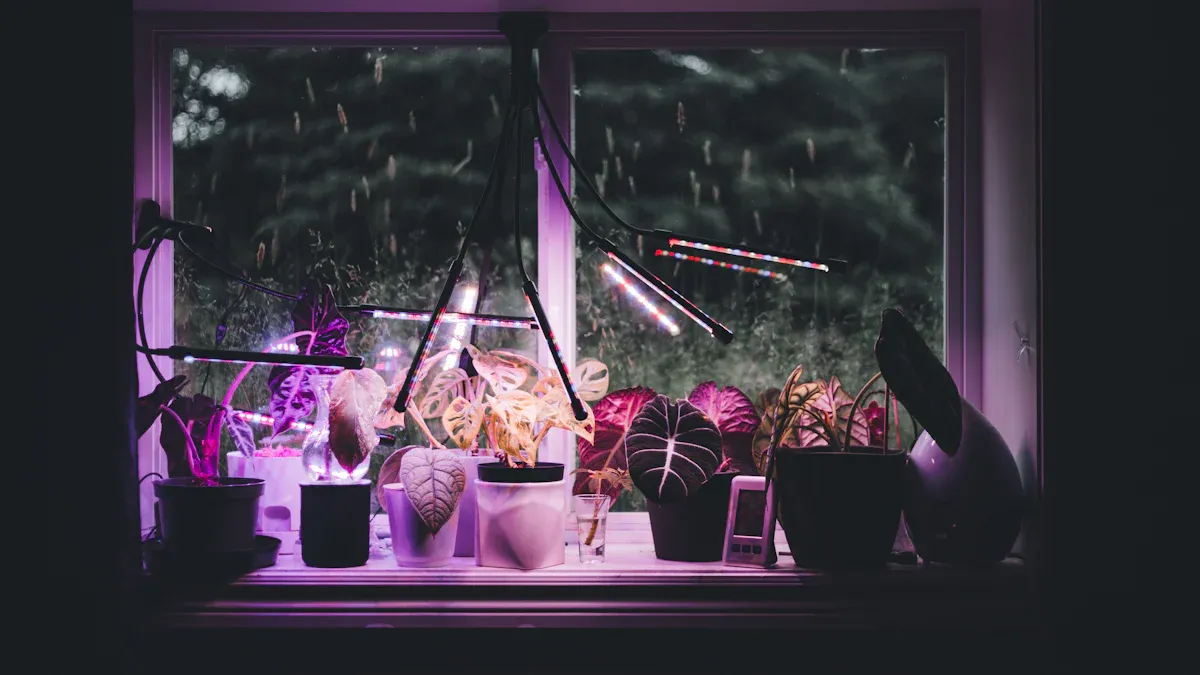
When I want the best results for my indoor plants, I always choose a top-rated LED grow light like the Spider Farmer SF1000. This model stands out because it delivers a full spectrum that closely mimics sunlight, giving plants the red and blue wavelengths they need for every growth stage. With a color temperature between 5000K and 6500K, I see healthier leaves and stronger stems. LED grow lights also use less energy and last longer than traditional bulbs, making them a smart investment for any grower.
Choose full-spectrum LED grow lights to mimic natural sunlight and support all growth stages of plants.
LED grow lights are energy-efficient, using at least 75% less energy than traditional bulbs, which saves on electricity bills.
Adjust the light spectrum and intensity based on the specific needs of your plants for optimal growth and yields.
Consider the wattage requirements for different plant types; low-light plants need 10-15 watts, while high-light plants require 20 watts or more per square foot.
Use built-in timers and dimmable controls to automate light schedules and adjust brightness as plants grow.
Pay attention to color temperature; blue light (5000K-6500K) is best for seedlings, while red light is crucial for flowering plants.
Monitor the distance between the light and plants to prevent light burn; adjust based on growth stages.
Research the specific needs of your plants to tailor your lighting setup for the best results.
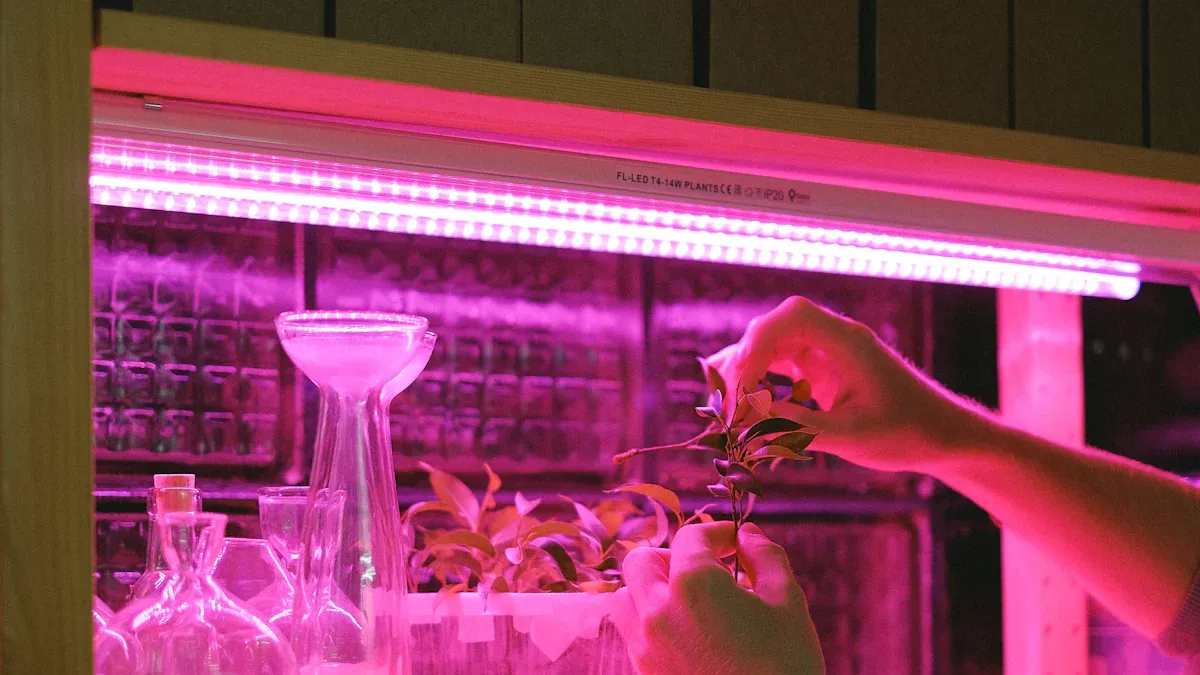
When I started using a led grow light for my indoor garden, I noticed a big difference in how my plants grew. These lights mimic natural sunlight by providing the right mix of red and blue wavelengths. This balance supports every stage of plant growth, from seedling to flowering. I have seen stronger stems, greener leaves, and more blooms when I use a full-spectrum led grow light.
Scientific studies show that red and blue LEDs boost photosynthesis and improve plant quality. Here is a quick look at what research says:
Finding | Description |
|---|---|
Effectiveness of Red and Blue LEDs | Red and blue light wavelengths enhance photosynthesis, biomass, and nutritional quality in plants. |
Optimal Light Conditions | Different plant species respond variably to light conditions, so I tailor my approach for each type. |
Impact on Nutritional Quality | Red light increases vitamin C and decreases nitrate levels, making crops healthier. |
I use led grow lights for cannabis because these plants need precise light control. The right spectrum helps cannabis grow faster and produce better yields. I also find that these lights work well for herbs, vegetables, and flowers. By adjusting the light spectrum and intensity, I can meet the needs of each plant in my collection.
When I compare led grow lights to traditional lighting, the advantages stand out. Here are some key differences:
LED grow lights use at least 75% less energy than incandescent bulbs.
They last up to 50,000 hours or more, while traditional bulbs often burn out after about 1,000 hours.
LED grow lights for cannabis help me save on electricity bills and reduce the need for frequent replacements.
Traditional lighting systems, like HPS and metal halide lamps, use a lot of electricity and create excess heat. This heat can stress plants and increase cooling costs. In my experience, led grow lights produce very little heat, so I do not worry about overheating my grow space. This efficiency also means I use less energy, which lowers my environmental impact.
LED grow lights are mercury-free, unlike some traditional bulbs. This makes them safer for my home and the environment. I appreciate that I can dispose of them easily and safely when they reach the end of their long lifespan.
Tip: If you want to grow cannabis indoors, led grow lights for cannabis offer the best mix of efficiency, safety, and plant health. You get better yields and healthier plants without the high energy costs.
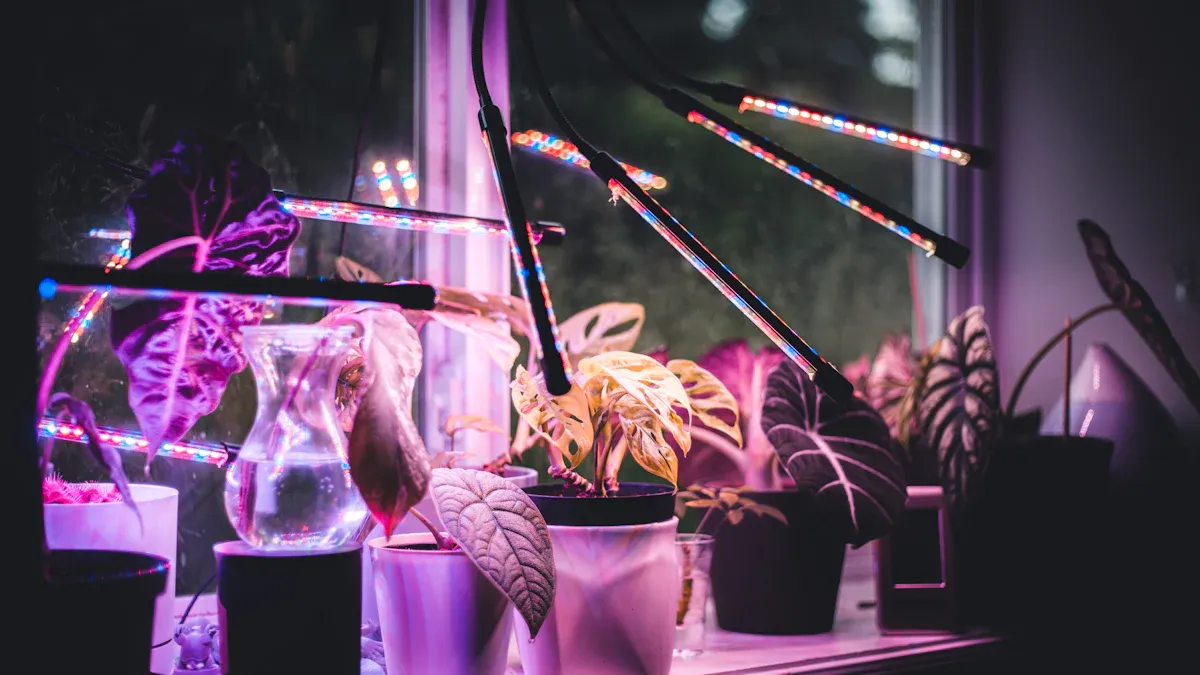
When I select a led grow light for my indoor garden, I look for models that offer a full spectrum light. These lights emit a wide range of wavelengths, closely mimicking natural sunlight. I find that full spectrum light supports every stage of plant growth, from seedlings to flowering. This versatility reduces plant stress during transitions between growth phases. Some advanced led grow light systems include programmable features, allowing me to automate light schedules and adjust the spectrum as my plants mature.
I notice that manufacturers offer different types of led grow lights. High CRI white LEDs provide a smooth spectrum curve, which benefits a variety of plant species. Specialized deep red LEDs, especially those around 660nm, boost flowering and fruiting. Some fixtures even include UVA and Far Red LEDs, which further enhance growth and yield. I appreciate these innovations because they allow me to tailor my lighting setup to the specific needs of my plants.
Note: Full spectrum light is ideal for growers who want consistent results across all plant types and growth stages.
I sometimes use standard LED bulbs in my grow space, especially when I need a budget-friendly solution. Standard LEDs with a color temperature between 5000K and 6500K can support healthy plant growth. These bulbs provide a balanced mix of blue and red light, which encourages strong stems and lush foliage. During the vegetative phase, I see my plants develop compact, bushy growth under these lights.
While standard LEDs do not offer the same precise control as a dedicated led grow light, they still deliver good results for herbs, leafy greens, and houseplants. I recommend them for beginners or anyone growing low-light plants. I always check the color temperature before purchasing, as this ensures my plants receive the right wavelengths for photosynthesis.
Standard LED lights are easy to install and energy efficient.
They work well for small spaces and starter gardens.
I pay close attention to color temperature when choosing lighting for my plants. Research shows that blue-dominant light in the 5000K-6500K range enhances vegetative growth, resulting in stronger stems and improved root development. I use these lights during the seedling and vegetative phases to promote bushier growth and higher chlorophyll production.
Color temperature influences photosynthesis and hormone production in plants. I find that adjusting the color temperature helps me optimize growth for different species. For flowering and fruiting, I switch to lights with more red wavelengths. This targeted approach leads to better yields and healthier plants.
Description | |
|---|---|
Full-spectrum LEDs | Mimic sunlight for versatile applications across many plant species. |
New heatsink technologies | Improve heat dissipation, allowing for compact fixtures and energy savings. |
Smart technology integration | Enable control via smartphone apps for real-time adjustments. |
Energy efficiency improvements | Maximize light output while minimizing energy consumption. |
Adaptive lighting systems | Adjust light based on plant growth stages for optimal conditions. |
Tip: I always match the color temperature and spectrum to the specific needs of my plants for the best results.
When I choose a led grow light, I always start by looking at the light spectrum. Plants need different wavelengths for each stage of growth. Blue light, which falls in the 400–500 nm range, helps seedlings and young plants develop thick leaves and strong roots. Red light, between 600–700 nm, supports photosynthesis and encourages flowering. Far-red light, from 700–800 nm, can influence the timing of flowering and the size of buds. I have seen that led grow lights for cannabis perform best when they offer a full spectrum, especially with a strong balance of red and blue.
Here is a quick overview of how different light spectrums affect plant growth:
Light Spectrum | Effect on Plant Growth | Growth Stage |
|---|---|---|
Blue Light (400–500 nm) | Triggers stomata opening, promotes thicker leaves | Seedling and Vegetative |
Red Light (600–700 nm) | Boosts photosynthesis, stem and leaf growth, flowering | All stages, especially Flowering |
Far-Red Light (700–800 nm) | Influences flowering timing and bud size | Flowering Stage |
I always select modern led grow lights that provide a full spectrum. This ensures my plants get the right wavelengths at every stage. Research shows that blue light is crucial for leaf expansion and root development, while red light maximizes photosynthesis and flowering. When I use a led grow light with adjustable spectrum, I can fine-tune the light for each plant type.
Tip: For the best results, match the light spectrum to your plant’s growth stage. Seedlings need more blue light, while flowering plants benefit from extra red.
Wattage and intensity play a huge role in plant health. I always check the recommended wattage per square foot for my specific plants. Low-light plants, like ferns, need only 10–15 watts per square foot. Medium-light plants, such as herbs, do well with 15 or more watts. High-light plants, including many fruiting crops, require at least 20 watts per square foot for strong growth. For led grow lights for cannabis, I aim for even higher wattage to maximize yields.
Here is a table that helps me decide the right wattage for different plant types and sizes:
Plant Type | Recommended Wattage (per square foot) |
|---|---|
Low-light plants | 10 - 15 watts |
Medium-light plants | 15 or more watts |
High-light plants | At least 20 watts |
Leafy greens and herbs | 30 - 50 watts |
Flowering/fruiting crops | Higher than 50 watts |
Small houseplants | 15 - 30 watts |
Medium-sized plants | 30 - 50 watts |
Larger/high-light plants | 50 - 100 watts |
I always consider the lumen output and energy efficiency of the led grow light. High-quality lights deliver more usable light with less energy. I also look for a high color rendering index (CRI) to ensure my plants receive natural-looking light. When I use led grow light technology with adjustable intensity, I can avoid burning sensitive plants and provide enough light for demanding species.
Note: I run my lights for 12–16 hours each day. I adjust the distance between the light and the plants to control intensity and prevent leaf burn.
Coverage area is another key factor I consider. I measure my grow space and match it to the coverage rating of the led grow light. If I have a large garden, I may need several lights to ensure every plant gets enough light. For small spaces, a single fixture with a focused beam works well.
When I plan my setup, I always:
Assess my plant’s light requirements, since different species need different light levels.
Evaluate the quality of the led grow light, focusing on lumen output and energy efficiency.
Consider the size and layout of my garden to determine how many lights I need.
If I use a light that is too weak or covers too little area, my plants may grow unevenly. I always check the manufacturer’s coverage chart and adjust my setup as my plants grow larger.
Tip: Overlapping light from multiple fixtures can help eliminate shadows and ensure even growth across your entire garden.
When I shop for a new LED Grow Light, I always look for special features that make my growing experience easier and more productive. These features help me customize the light for my plants and save time on daily tasks. Here are some of the most valuable options I consider:
A built-in timer lets me set the exact hours my plants receive light each day. I do not have to remember to turn the light on or off. This feature keeps my plants on a consistent schedule, which is important for healthy growth. I usually set my timer for 12 to 16 hours, depending on the plant type.
Dimmable LED Grow Lights give me control over light intensity. I can start seedlings with lower brightness and increase it as the plants mature. This flexibility helps me avoid burning young plants and ensures mature plants get enough light. I find this especially useful when I grow different species in the same space.
Some advanced LED Grow Lights allow me to adjust the spectrum. I can boost blue light during the vegetative stage and switch to more red light for flowering. This feature lets me tailor the light to each stage of plant growth, which leads to better yields and healthier plants.
Daisy-chaining means I can connect several lights together and control them with a single power source. This setup reduces clutter and makes it easier to expand my grow area. I use daisy-chaining when I want to cover a larger space or add more plants.
Many modern LED Grow Lights now offer smart controls. I can adjust settings from my phone or tablet using a dedicated app. This technology lets me monitor my grow lights remotely, change schedules, and even receive alerts if something goes wrong. I appreciate the convenience and peace of mind this brings.
Efficient cooling systems, like built-in fans or advanced heat sinks, keep the LED Grow Light running at the right temperature. My plants stay safe from heat stress, and the light lasts longer. I always check for good cooling features before making a purchase.
I often water my plants and sometimes humidity levels get high. A waterproof and durable LED Grow Light gives me confidence that my equipment will last. I look for lights with an IP65 or higher rating for extra protection.
Tip: I always match special features to my growing style and plant needs. For example, if I travel often, I choose a light with smart controls and a timer. If I grow many plants, I look for daisy-chaining and strong cooling systems.
Here is a quick comparison of popular special features:
Feature | Benefit | My Experience |
|---|---|---|
Built-in Timer | Automates light schedule | Saves time, keeps plants consistent |
Dimmable Control | Adjusts brightness for plant stage | Prevents burn, boosts growth |
Adjustable Spectrum | Customizes light for each growth phase | Improves yield and health |
Daisy-Chaining | Expands coverage easily | Reduces cords, simplifies setup |
Smart Controls | Remote monitoring and adjustments | Adds convenience, peace of mind |
Cooling System | Prevents overheating | Extends light lifespan |
Waterproof Design | Protects against moisture | Increases durability |
When I choose an LED Grow Light, I always weigh these features against my budget and growing goals. The right combination of special features can make indoor gardening much more successful and enjoyable.
When I search for the best led grow lights, I always look for models that deliver top-tier performance and reliability. Industry experts and user reviews consistently rate the Gavita Pro 1700e and Gavita 1650e as the best grow lights available. These models stand out because they offer high efficiency and strong light output, which helps my plants thrive in every growth stage.
Gavita Pro 1700e LED: This light achieves a performance rating of 2.7 umol/Joule. I use it for large grow spaces where I need maximum coverage and intensity. The even distribution of light ensures my plants receive consistent energy, leading to healthier growth and better yields.
Gavita 1650e LED: With a rating of 2.61 umol/Joule, this model is another top choice among the best led grow lights. I recommend it for growers who want professional results and long-term durability.
Both Gavita models provide full-spectrum output, which is essential for supporting all phases of plant development. I trust these lights when I want the best grow lights for my indoor garden.
For those just starting out, I always suggest the Spider Farmer SF-1000 as one of the best led grow lights. This model is easy to set up and delivers impressive results for small to medium-sized gardens. The Spider Farmer SF-1000 covers a 3 ft x 3 ft area for vegetative growth and a 2 ft x 2 ft area for fruiting plants. I find its average PPFD of 375 more than sufficient for strong, healthy plants.
The light distribution is even, which helps prevent weak spots in my garden. I use this led grow light for seedlings, lettuce greens, and herbs. It replaces older fluorescent systems with better efficiency and lower energy costs. Beginners appreciate the straightforward controls and reliable performance. I always recommend the Spider Farmer SF-1000 to anyone looking for the best grow lights to start their indoor gardening journey.
When I need the best led grow lights without spending a lot, I turn to the LEOTER LED Grow Light. This model offers a great balance between price and performance. The LEOTER features adjustable arms and multiple light modes, which allow me to customize the setup for different plant types. I use it for small gardens, houseplants, and seedlings.
The LEOTER provides full-spectrum light, supporting both vegetative and flowering stages. I find it easy to install and energy efficient, making it one of the best grow lights for budget-conscious growers. The flexible design lets me position the light exactly where my plants need it most. I recommend the LEOTER to anyone who wants reliable results without a high upfront investment.
Tip: When choosing the best led grow lights, always consider your garden size, plant type, and budget. The right light can make a big difference in plant health and yield.
When I grow plants in a small apartment or a compact indoor garden, I always look for an LED Grow Light that fits tight spaces without sacrificing performance. I have found that the Barrina LED T5 Grow Light stands out as the best choice for small spaces. This model offers a slim, lightweight design that allows me to mount it under shelves, inside cabinets, or even in a closet garden. The Barrina delivers a full spectrum of light, which means my herbs, succulents, and leafy greens receive the wavelengths they need for healthy growth.
I appreciate how easy it is to install the Barrina. The package includes mounting clips and connectors, so I can link several lights together for broader coverage. The low-profile design keeps my growing area uncluttered and maximizes usable space. I often use these lights for seed starting trays or small hydroponic setups. The energy efficiency also helps me keep electricity costs low, which is important when I run the lights for 12-16 hours each day.
Here are some reasons why I recommend the Barrina LED T5 Grow Light for small spaces:
Slim and lightweight: Fits almost anywhere, even in tight corners.
Full-spectrum output: Supports all stages of plant growth.
Easy installation: Includes clips and connectors for quick setup.
Linkable design: Connect multiple lights for larger coverage.
Low heat output: Keeps my plants safe from heat stress.
Tip: For the best results in small spaces, I always position the LED Grow Light 6-12 inches above my plants. This distance ensures strong light intensity without burning the leaves.
I have also used standard LED bulbs with a color temperature of 5000K-6500K in small desk gardens or terrariums. These bulbs work well for low-light houseplants and seedlings. However, I find that dedicated grow lights like the Barrina provide more consistent results and healthier plants.
Product | Spectrum | Size/Design | Ideal Use Case |
|---|---|---|---|
Barrina LED T5 Grow Light | Full-spectrum | Slim, linkable | Shelves, cabinets, trays |
Standard LED Bulb | 5000K-6500K | Compact bulb | Desk gardens, terrariums |
When I want to maximize my growing potential in a small area, I always choose an LED Grow Light that combines efficiency, flexibility, and strong light output. The right light transforms even the tiniest corner into a thriving indoor garden.
When I focus on flowering and fruiting plants, I know that the right LED Grow Light can make all the difference. I always recommend the Mars Hydro TS 1000 for growers who want to boost blooms and maximize yields. This model delivers a powerful full-spectrum output with an extra emphasis on red wavelengths, which are essential for triggering flowering and fruit production.
The Mars Hydro TS 1000 covers a 2.5 ft x 2.5 ft area, making it perfect for small to medium grow tents or dedicated flowering zones. I use this light for tomatoes, peppers, and even cannabis. The high PAR (Photosynthetically Active Radiation) value ensures my plants receive intense, usable light during the critical flowering stage.
Key features that make the Mars Hydro TS 1000 my top pick for flowering:
Enhanced red spectrum: Promotes abundant blooms and fruit set.
High PAR output: Delivers strong light intensity for dense flowers.
Dimmable driver: Lets me adjust brightness for different plant needs.
Silent operation: No noisy fans, so my grow room stays quiet.
Energy efficient: Saves power while delivering professional results.
Note: I always switch to a flowering-focused LED Grow Light when my plants start to bud. This change supports bigger, healthier flowers and better harvests.
For growers who prefer a budget-friendly option, I have used the VIPARSPECTRA P600. This model also offers a red-rich spectrum and works well for compact flowering setups. Both lights provide the targeted wavelengths that flowering plants crave.
Product | Spectrum Focus | Coverage Area | Best For |
|---|---|---|---|
Mars Hydro TS 1000 | Red-rich, full | 2.5 ft x 2.5 ft | Flowering, fruiting |
VIPARSPECTRA P600 | Red-rich, full | 2 ft x 2 ft | Budget flowering setups |
When I want to see vibrant blooms and heavy yields, I always invest in an LED Grow Light designed for the flowering stage. The right spectrum and intensity help my plants reach their full potential every time.
When I compare the top LED Grow Lights, I always look at the features that matter most for healthy plant growth. I focus on spectrum, wattage, coverage area, and price. Each model brings something unique to the table. I created a table to help you see the differences at a glance:
Model | Spectrum | Wattage Draw | Coverage Area | Price Range | Special Features |
|---|---|---|---|---|---|
Spider Farmer SF-1000 | Full Spectrum | 100W | 2x2 ft (flowering) | $120–$160 | Dimmable, high efficiency |
Gavita Pro 1700e | Full Spectrum | 645W | 4x4 ft (flowering) | $450–$500 | High PPFD, pro-grade build |
LEOTER LED Grow Light | Full Spectrum | 40W | 1x1 ft (seedlings) | $30–$50 | Adjustable arms, timer |
Barrina LED T5 | Full Spectrum | 24W/bar | Flexible, linkable | $70–$120 | Slim, linkable, easy install |
Mars Hydro TS 1000 | Red-rich, Full | 150W | 2.5x2.5 ft | $130–$180 | Dimmable, high PAR, silent |
I always check the spectrum first. Full-spectrum lights support every stage, while red-rich models boost flowering. I also look at wattage and coverage to match my grow space. Price varies by size and features, so I pick what fits my needs and budget.
LED Grow Lights come in different forms, like boards, bars, and panels. Boards and bars usually cost between $70 and $500. Traditional panels range from $100 to $400. Most modern lights offer a full spectrum, but some let me adjust the spectrum for specific growth stages.
I have tested many types of grow lights. LED Grow Lights stand out for their efficiency and plant-friendly features. Here is a quick comparison of LED Grow Lights and fluorescent grow lights:
Feature | LED Grow Lights | Fluorescent Grow Lights |
|---|---|---|
Efficiency | Use less energy for the same light output | Use more energy for the same light output |
Spectrum | Can emit specific wavelengths for growth | Emit a broader spectrum, less optimized |
Lifespan | Last up to 10 times longer | Shorter lifespan, more replacements |
Heat | Emit less heat, can be placed closer | Emit more heat, need more distance |
Durability | More durable, less likely to break | Fragile, prone to breaking |
Cost | Higher initial cost | Cheaper upfront |
In my experience, LED Grow Lights save me money on electricity and last much longer. I place them closer to my plants without worrying about heat damage. The higher upfront cost pays off over time because I replace them less often.
I always recommend LED Grow Lights for anyone serious about indoor gardening. They give me control over the light spectrum, use less power, and keep my plants healthy through every stage. If you want the best results, choose a model that matches your space and plant needs.
When I set up my LED Grow Light, I always pay close attention to placement and distance. The right setup ensures my plants get the best light exposure without stress or damage. I match the number and type of fixtures to the specific needs of my plants. For example, high-light plants like tomatoes or peppers thrive when I place the light closer, while low-light houseplants prefer more distance. I often use the following guidelines for different growth stages:
Seedling: 18–24 inches
Vegetative: 12–18 inches
Pre-flowering: 8–12 inches
Flowering: 6–10 inches
Fruiting: 6–12 inches
I also consider the ambient environment. If my grow room feels warm or the humidity drops, I increase the distance to prevent stress. In CO₂-enriched spaces, I can safely move the lights closer for more intense light exposure. I document the initial height, check regularly, and adjust in small increments—usually 2–3 inches at a time. This approach helps me avoid light burn and ensures even growth.
A consistent light schedule is essential for healthy plants. I tailor the daily hours of light exposure to each growth stage. For most indoor gardens, I follow these recommendations:
Growth Stage | |
|---|---|
Seedling Stage | 18–20 hours |
Vegetative Stage | 16–18 hours |
Flowering/Fruiting | 12–14 hours |
General Requirement | 8–10 hours minimum, 18 maximum |
I use timers to automate the schedule, which keeps my plants on track and reduces the risk of mistakes. When I grow with led grow lights for cannabis, I stick closely to these guidelines because cannabis responds strongly to changes in light exposure. Proper scheduling helps me achieve robust growth and abundant yields.
Every plant has unique requirements. I always research the specific needs of each species before adjusting my setup. High-light crops demand more intense light and closer placement, while leafy greens and herbs do well with moderate settings. For led grow lights for cannabis, I monitor the plants closely and adjust the distance and intensity as they move from vegetative to flowering stages.
I also pay attention to the overall growing conditions. Factors like temperature, humidity, and airflow all influence how my plants respond to light. By observing leaf color, growth rate, and overall health, I can fine-tune my approach for the best results.
Tip: I keep a simple log of changes and plant responses. This record helps me refine my methods and avoid repeating mistakes.
Even with the best LED Grow Light, I sometimes run into challenges. Over the years, I have learned how to spot and fix the most common problems. Here are the issues I see most often and how I solve them:
When I notice my plant leaves turning yellow, I check the light first. Too much light or the wrong spectrum can stress plants. I adjust the distance between the LED Grow Light and the canopy. I also make sure the light runs for the right number of hours. If the problem continues, I look at watering and nutrients.
If my plants look tall and thin, they probably need more light. I move the LED Grow Light closer to the plants. I also check the wattage and coverage area. Sometimes, I add another light to fill in dark spots. Strong, compact growth tells me the light intensity is just right.
White or brown patches on leaves mean the light sits too close or shines too bright. I raise the LED Grow Light a few inches and lower the intensity if possible. I watch my plants for a few days to see if new growth looks healthy.
When some plants grow faster than others, I check for shadows or uneven coverage. I rearrange my plants or add a second LED Grow Light to balance the light. I rotate my pots every few days so each plant gets equal exposure.
Sometimes, my LED Grow Light flickers or will not turn on. I check the power source and make sure all connections are tight. If the problem continues, I contact the manufacturer for support. I always keep the warranty information handy.
Here is a quick reference table for troubleshooting:
Problem | Likely Cause | Solution |
|---|---|---|
Yellowing leaves | Too much/too little light | Adjust distance, check schedule |
Leggy growth | Not enough light | Move light closer, increase intensity |
Leaf burn/bleaching | Light too close/intense | Raise light, dim if possible |
Uneven growth | Poor coverage/shadows | Rearrange plants, add more lights |
Flickering/no power | Electrical issue | Check connections, contact support |
Tip: I clean my LED Grow Light every few weeks to remove dust. Clean lights give off more usable light and last longer.
By staying alert and making small adjustments, I keep my indoor garden healthy and productive. Troubleshooting helps me get the most out of my LED Grow Light and ensures my plants always look their best.
After testing many options, I always recommend the Spider Farmer SF-1000 as my top LED grow light. Spectrum, wattage, and placement each play a vital role in plant success:
Aspect | Why It Matters |
|---|---|
Spectrum | Blue and red light drive growth and flowering. |
Wattage | Proper intensity ensures healthy development. |
Placement | Good arrangement boosts photosynthesis efficiency. |
I match my light to my plant type and grow space. I use the comparison table and practical tips to get the best results every time.
A regular LED provides general lighting. An LED Grow Light delivers a full spectrum tailored for plant growth. I use LED Grow Lights because they offer the right wavelengths for photosynthesis, which helps my plants grow faster and healthier.
I usually run my LED Grow Light for 12 to 16 hours each day. Most plants need this amount of light to thrive indoors. I use a timer to keep the schedule consistent and avoid stressing my plants.
I have used standard LEDs with a color temperature of 5000K–6500K for some plants. However, I see better results with dedicated LED Grow Lights. These lights provide the specific spectrum and intensity that plants need for all growth stages.
I adjust the distance based on plant type and growth stage. For seedlings, I keep the light 18–24 inches away. For mature plants, I move it closer, about 6–12 inches. I always watch for signs of light burn or stretching.
LED Grow Lights produce much less heat than traditional bulbs. I can place them closer to my plants without worrying about overheating. Some models include built-in cooling systems, which help maintain a safe temperature in my grow space.
Plants need both blue and red light. Blue light supports leafy growth, while red light encourages flowering and fruiting. I always choose a full-spectrum LED Grow Light to cover all stages of plant development.
Yes, LED Grow Lights use less electricity than fluorescent or incandescent bulbs. I have seen my energy bills drop after switching to LEDs. They also last longer, which saves me money on replacements.
I use LED Grow Lights for herbs, leafy greens, vegetables, flowers, and even succulents. They work especially well for light-loving plants like tomatoes, peppers, and cannabis. I always match the light intensity to the plant’s needs.


 English
