
Views: 0 Author: Site Editor Publish Time: 2025-10-15 Origin: Site


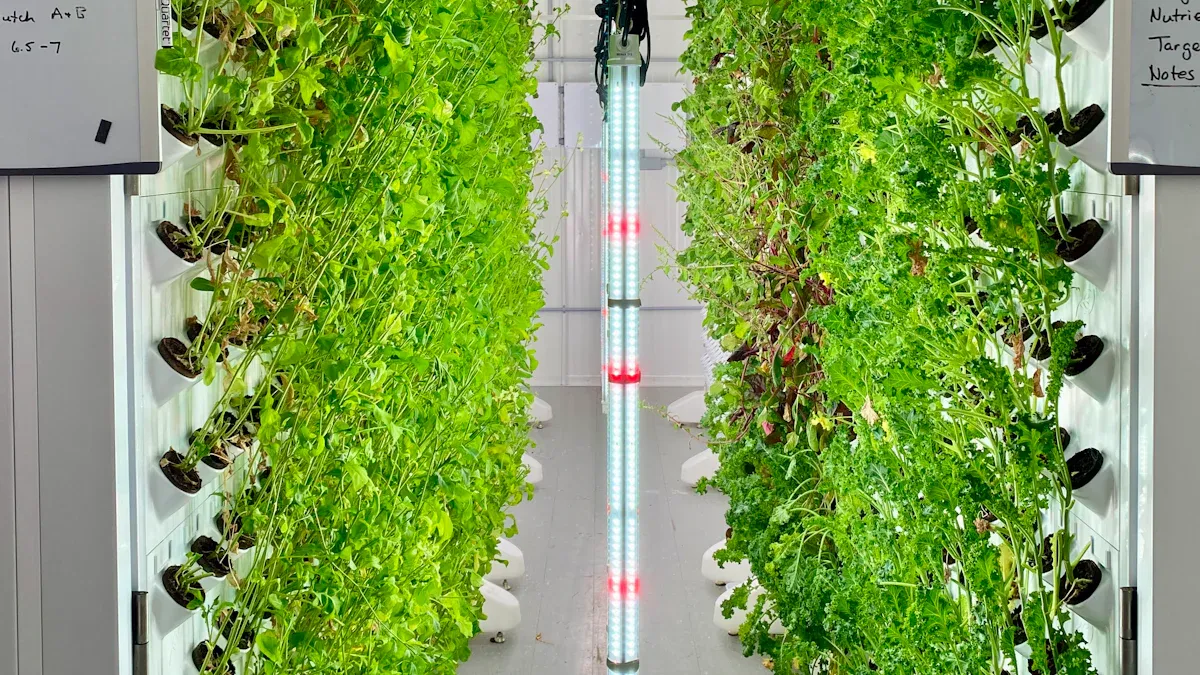
When I look at the growing popularity of LED Grow Light systems, I see many cultivators making the switch. For example:
Nearly half of growers use LEDs during propagation, vegetation, and flowering.
Despite this trend, I have noticed several drawbacks that can affect results. High initial costs, technical complexity, and weight issues often challenge even experienced growers. In this article, I will examine these disadvantages to help you make informed choices.
LED grow lights have a high initial cost, which can deter new growers. However, they save money on electricity and maintenance over time.
Light quality can vary with LEDs. Some models may not provide a full spectrum, affecting plant growth. Always check the spectrum before purchasing.
LEDs can cause light burn if placed too close to plants. Monitor plant health and adjust light height to prevent damage.
Uneven light distribution can lead to inconsistent growth. Use reflective materials and adjust light placement for better coverage.
LED grow lights contain hazardous materials. Proper recycling is essential to prevent environmental harm when they reach the end of their life.
When I first considered upgrading my grow light systems, the sticker shock surprised me. LED grow light units often cost much more upfront than traditional options. To give you a clear picture, I have compared the initial and ongoing costs in the table below:
Lighting Type | Capital Expenditure (CapEx) | Operational Expenditure (OpEx) (per month) | Total Cost After 10 Months |
|---|---|---|---|
LED | $1000 | $100 | $2000 |
HID | $200 | $200 | $2200 |
This table shows that while the initial investment for LEDs is five times higher than HID lights, the monthly operating costs are lower. Many growers hesitate at the beginning because of this high upfront price. I have seen some growers delay upgrades or choose less efficient systems to save money in the short term.
Despite the steep initial cost, I have learned that LED grow light systems can offer savings over time. LEDs use up to 40–60% less electricity than traditional lights. They also produce less heat, which means I spend less on cooling and ventilation. Over a full growing season, these savings add up.
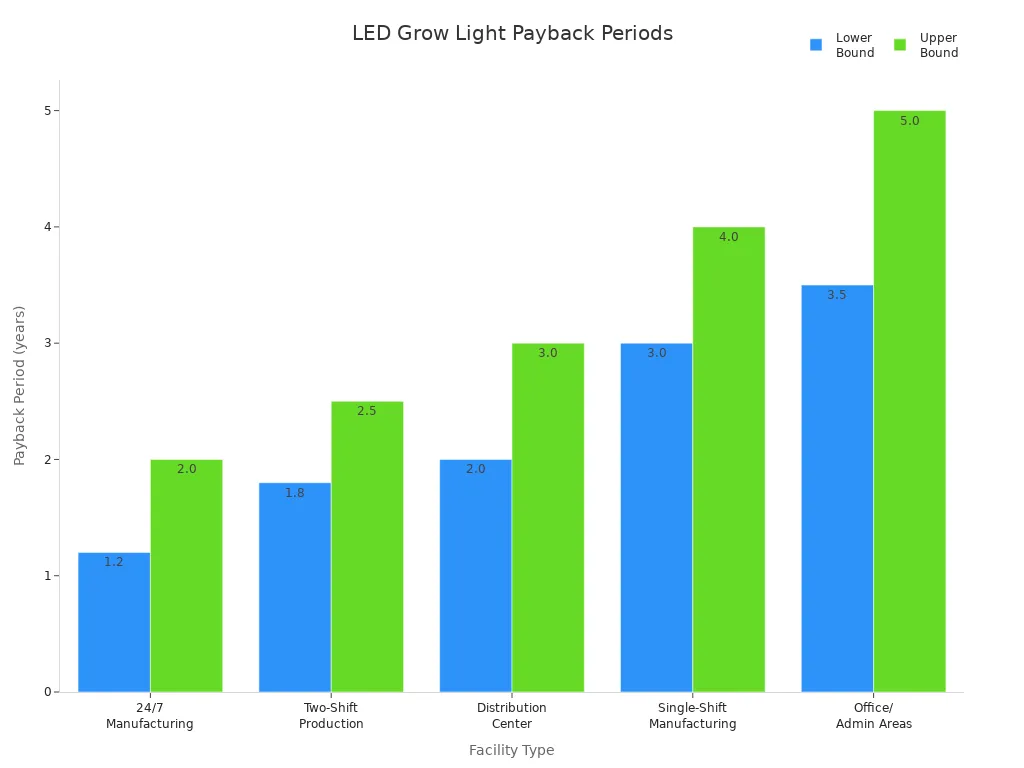
The payback period for LEDs depends on how often I run my lights. For example, in a 24/7 operation, the payback can be as short as 1.2 to 2 years. In less intensive settings, it might take up to 5 years. The chart below shows typical payback periods for different facility types:
I also appreciate that LEDs last much longer than other technologies. Most LED units run for 50,000 to 100,000 hours, while HPS or HID bulbs last about 20,000 hours. This means I replace bulbs less often and spend less on maintenance.
Note: Although the long-term value is strong, the high initial cost can still be a barrier for many growers, especially those just starting out.
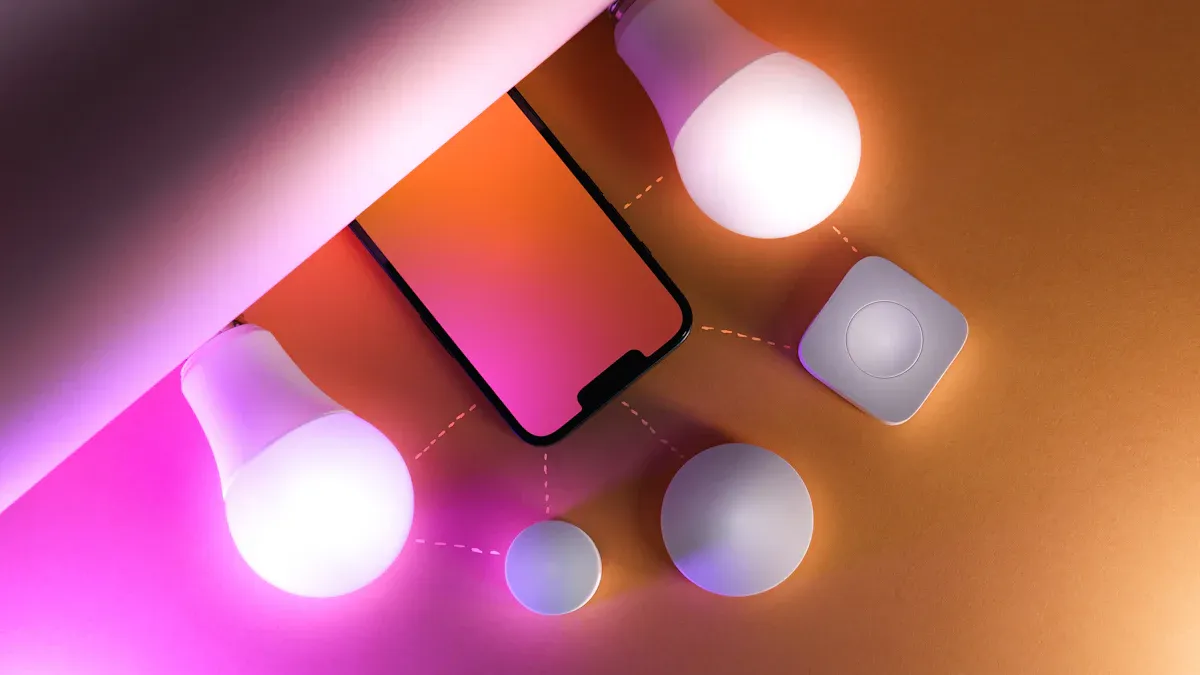
When I started using grow light systems, I quickly realized that not all lights deliver the same quality. Some led grow light models offer a limited spectrum, which can affect plant growth. I noticed that while these lights can be designed to emit specific wavelengths, they often focus on red and blue bands. This approach works for some plants, but it does not always match the full spectrum of natural sunlight.
I have seen that individual LED chips produce narrow bands of light. Manufacturers mix these bands to create a spectrum, but sometimes the mix is not complete.
Some models allow me to adjust the spectrum using apps or touchscreens. This feature gives me more control, but it also means I need to understand what my plants need at each stage.
Unlike HID lamps, which degrade and lose spectral quality over time, LEDs maintain their output. However, if the spectrum is incomplete from the start, my plants may not thrive.
I always check the spectrum chart before buying new lights. A full spectrum supports better growth, but not every product delivers this.
When I work under purple LED lights, I often feel discomfort in my eyes. The strong mix of red and blue light creates a purple hue that can be harsh. I have read that this type of light can cause eye strain and even headaches.
Blue light, which is common in many LED grow lights, disrupts my circadian rhythm. It sometimes leads to migraines or visual fatigue.
I have noticed that flickering from some LEDs makes my eyes hurt after long periods. This flicker can cause headaches, nausea, or eye pain for sensitive people.
Tip: I wear protective glasses when working under purple LED lights. This simple step helps reduce eye strain and keeps me comfortable during long hours in the grow room.
When I first switched to led grow light setups, I noticed some plants reacted badly to the intense light. Light burn became a real concern in my grow room. I saw leaves pointing upwards, almost as if the plants tried to escape the brightness. The leaves closest to the light sometimes turned white or yellow, a clear sign of bleaching. Oddly, the veins stayed green even as the rest of the leaf changed color.
If I placed the lights too close, the heat scorched the leaves and damaged the stems. High-intensity light overwhelmed the plants’ ability to process energy, leading to visible stress.
Here are the main signs I watch for:
Upward leaf curling
White or yellow patches on upper leaves
Green veins with yellowed leaf tissue
I learned to adjust the height of my grow light systems and monitor the intensity. Even though LEDs run cooler than some traditional lights, they still pack enough power to cause harm if I am not careful.
Getting the right spectrum is just as important as managing intensity. I discovered that plants need specific wavelengths, especially red and blue, for healthy growth. If the spectrum is off, I see problems like stunted growth or odd shapes. Sometimes, too much red light causes my plants to stretch out, making them less appealing.
Missing or unbalanced wavelengths can reduce how much my plants grow.
I noticed that using only blue or only red LEDs led to smaller, weaker plants.
Scientific studies show that a mix of blue and red at the right levels boosts yield and plant health.
I always check the spectrum chart before buying new lights. The wrong spectrum can mean lower yields and less healthy plants, even if everything else looks right.
When I set up my first grow light systems, I expected even coverage across my plants. In reality, I saw some areas thriving while others lagged behind. Uneven light distribution can become a real headache, especially in larger grow rooms. I noticed the center of the grow area often gets the most intense light, while the corners and edges receive much less. This difference can lead to inconsistent plant growth.
Light uniformity means how evenly the light spreads across the growing area.
In my experience, the highest intensity sits right under the fixture, dropping off toward the sides.
I found that wall reflectance and chamber size also affect how well the light spreads.
Here’s a table showing some key uniformity metrics I’ve come across:
Metric | Value |
|---|---|
Longitudinal light intensity uniformity | 71% |
Standard deviation of color mixing | 0.0025 |
Longitudinal height uniformity | 52.5% |
Longitudinal weight uniformity | 49.7% |
I often have to move my plants around or adjust the height of my led grow light to help even out the coverage. Sometimes, I add reflective materials to the walls to bounce light back onto the plants.
When I compare LEDs to traditional lights like HPS or MH, I see a clear difference in output. HPS bulbs keep their brightness longer, losing only about 20–35% of their output over 24,000 hours. Metal halide bulbs lose even more, sometimes up to 80% by the end of their lifespan. The best way I’ve found to compare these lights is by looking at their PAR output, measured in PPFD.
LEDs often have lower peak output than HPS, especially in larger setups.
I noticed that some plants under LEDs grow slower or look less robust than those under high-output HPS bulbs.
For growers who need maximum intensity, traditional lights might still have an edge.
I always check the specs before buying new grow light systems. It helps me decide if the trade-off in output is worth the energy savings and longer lifespan.
When I first started using grow light systems, I faced a steep learning curve. I had to figure out the right spectrum, wattage, and placement for each plant. It took time to understand how different settings affected growth. Many new users struggle with these same issues. I often see confusion about how to balance light intensity and coverage. Some growers worry about energy costs or overheating plants. I found a table that shows the most common challenges reported by growers:
Challenge | Percentage of Growers Reporting |
|---|---|
Impact on plant growth | 22% |
17% | |
Uniformity of light distribution | N/A |
I noticed that managing heat and achieving uniform light distribution can be tough. High energy costs also make some growers hesitate to switch. I learned to adjust my setup and monitor my plants closely. It helped me avoid mistakes and improve my results.
Tip: I recommend starting with a small setup. It makes it easier to learn how your plants respond to different settings.
Difficulty in managing heat can lead to overheating.
Uneven light distribution causes some plants to grow slower.
High energy costs impact my budget.
Working under certain led grow light spectrums, I found it hard to spot pests or plant damage. The purple or blue light sometimes hides small problems. I missed signs of stress or disease until they became serious. Some spectrums lack UV-A and UV-B, which makes plants more vulnerable to pests. Without UV-B, plants lose some natural defenses. I read that plants use UV-B to trigger protective responses. If my lights do not provide this spectrum, I have to check my plants more often.
Some pests become harder to see under colored light.
Disease symptoms may not show up clearly.
Plants without UV-B are more likely to get sick.
I use a flashlight or natural light to inspect my plants. It helps me catch issues early and keep my grow healthy.
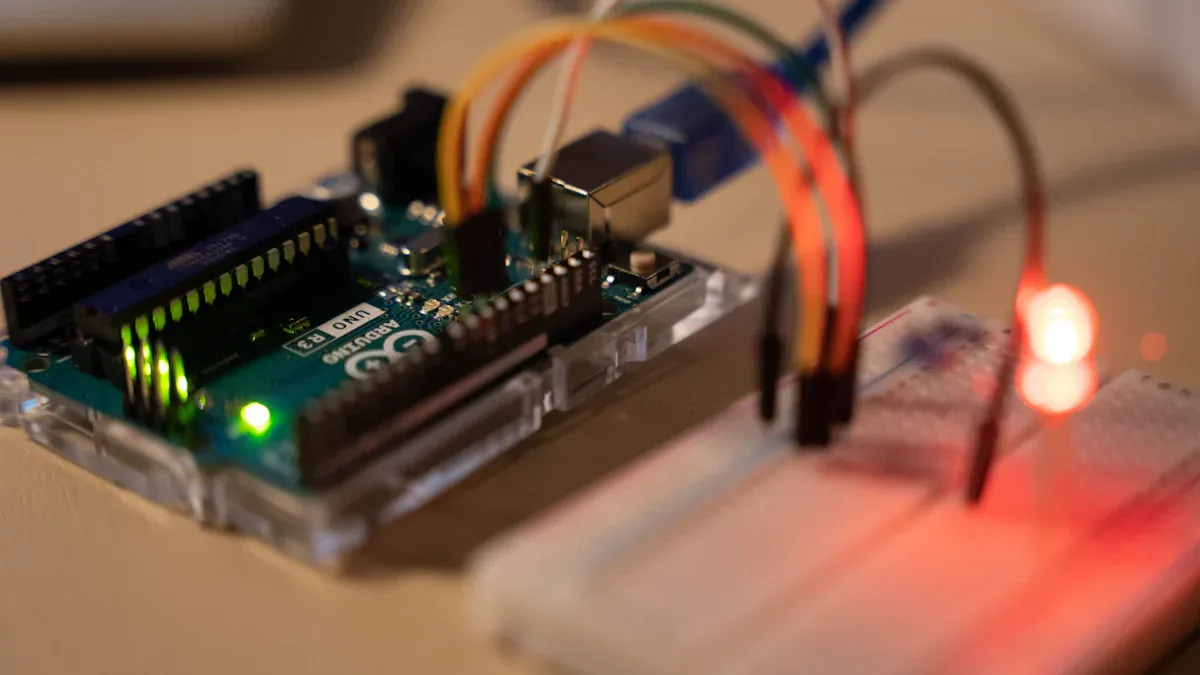
I have seen LED grow lights last for thousands of hours. Most diodes run for 50,000 to 100,000 hours before their brightness drops. The L90 rating means the light output falls by only 10% after this time. However, I noticed the real problem often comes from the drivers inside the fixtures. These drivers use electrolytic capacitors, which do not handle heat well. When my grow room gets hot, the drivers fail faster. I have replaced entire fixtures because one part stopped working. It frustrates me when a single diode or driver fails, since I cannot swap out just that piece. I must buy a new unit or send it for repair.
I keep a close eye on temperature. High heat shortens the life of my lights. I check for flickering or dim spots, which signal trouble. I learned to install extra fans and keep my grow area cool. This helps my LEDs last longer.
Tip: I always monitor the temperature around my fixtures. Cooler conditions help prevent early driver failure.
Some LED grow lights feel heavy when I install them. The built-in heat sinks add weight. I struggle to hang these units above my plants, especially in tight spaces. I sometimes need help to lift and secure them. The weight makes it harder to adjust the height or move the lights for cleaning.
Here are the most common maintenance issues I have faced:
Driver overheating
Power surges
Harmonic distortion
Improper installation
I use strong hooks and brackets to support heavy fixtures. I double-check the mounting hardware before turning on the lights. If I do not install them properly, the lights can fall or shift, risking damage to my plants and equipment.
Maintenance Issue | Impact on Grow Room |
|---|---|
Driver overheating | Shortens lifespan |
Power surges | Sudden failure |
Harmonic distortion | Flickering lights |
Improper installation | Safety hazard |
I stay alert for these problems. Regular checks and careful installation keep my grow room running smoothly.
When I set up my LED grow light system, I noticed a big difference in heat output compared to older HPS bulbs. LED grow lights produce only about a third of the heat that HPS bulbs do. This means I can place them closer to my plants without worrying about burning leaves or causing stress. I feel safer working in my grow room because the risk of fire drops with LEDs.
Here’s a quick comparison:
Type of Grow Light | Heat Output |
|---|---|
LED Grow Lights | Low |
HPS Grow Lights | High |
I always pay attention to air temperature. I keep it around 83°F to 85°F for healthy plant metabolism. In the last two weeks of flowering, I lower the temperature by a few degrees to help my plants ripen. I check root zone temperatures, making sure they stay below 75°F. If the air gets too warm, I add CO₂, but I never let it go above 3000 ppm. I also choose the right wattage for my lights and adjust their height to avoid hot spots. Good airflow is key, so I use fans and vents to keep the room cool.
LED grow lights generate minimal heat during operation, reducing fire risk.
Proper ventilation helps prevent hot spots and keeps plants healthy.
Adjusting light height and wattage controls heat exposure.
When my LED grow lights reach the end of their life, I face another challenge. These lights contain hazardous materials like lead, mercury, and brominated flame retardants. If I throw them away without recycling, toxic substances can leak into the soil and water. This pollution harms the environment and can affect human health.
I always look for recycling options. Recycling keeps dangerous chemicals out of landfills and recovers valuable resources. It also reduces the need for mining and cuts down on carbon emissions. Proper recycling helps protect ecosystems and keeps my grow operation sustainable.
LED grow lights contain hazardous materials that can pollute soil and water.
Recycling prevents toxic substances from harming the environment.
Repurposing materials reduces electronic waste and carbon emissions.
When I look at the negatives of grow light usage, I see several situations where the drawbacks become hard to ignore. Sometimes, the high upfront cost makes me pause before upgrading my setup. I know many growers who feel the same way. The price tag on quality LED grow lights can be a dealbreaker, especially for beginners or those running small operations.
I often run into issues when the light spectrum does not match my plants’ needs. Some cheaper LED models lack the full spectrum, so my plants do not grow as well. I have seen certain species struggle under these lights, especially when they need specific wavelengths. The negatives of grow light usage become clear when I try to grow plants that demand more than just red and blue light.
Here is a table that shows when these negatives matter most:
Disadvantage | Explanation |
|---|---|
High initial cost | The price can stop growers from switching to LEDs. |
Quality of light spectrum | Incomplete spectrum leads to poor plant growth. |
Specific plant needs | Some plants need light conditions that cheap LEDs cannot provide. |
I have learned that the negatives of grow light usage also show up in the learning curve. Figuring out the right spectrum and intensity takes time. I sometimes make mistakes and see my plants suffer. The market has many LED options, but not all deliver what they promise. I need to research before I buy, or I risk wasting money.
Here are the main drawbacks I have noticed:
Higher initial cost. I pay more at the start for quality.
Technology and quality vary. Some lights do not perform as advertised.
Steep learning curve. I must experiment to get the best results.
Risk of light stress. Plants can bleach or burn if I set the intensity wrong.
I always weigh these negatives of grow light usage before making changes to my grow room.
When I started growing indoors, I wanted to know the real pros and cons of grow lights. I compared different types—LED, HPS, MH, and fluorescent—by looking at how they affect my plants and my wallet. Each type has strengths and weaknesses. I put together a table to make it easier to see the differences:
Light Type | Pros | Cons |
|---|---|---|
LED | Requires less electricity | |
HPS | Intense light at low cost | High heat production |
MH | Good spectrum for vegetative growth | High heat production |
Fluorescent | Lower initial cost | Less efficient than LEDs |
I noticed that LED grow lights stand out for energy savings and low heat. My plants respond well to the precise spectrum. I can adjust the light to match each growth stage. Research shows that LEDs can deliver the exact wavelengths plants need. This helps me get better yields and healthier growth.
When I used HPS or MH lights, I saw more heat in my grow room. I had to run extra fans. My energy bills went up. Fluorescent lights worked for seedlings, but they did not give enough power for mature plants.
Here is another quick comparison:
Feature | LED Grow Lights | Non-LED Grow Lights |
|---|---|---|
Light Spectrum | Engineered for plants | Mostly white/yellow |
Light Intensity (PPFD) | Up to 1400 µMol/m²/S | 25–600 µMol/m²/S |
Heat Emission | Minimal | High |
Energy Efficiency | Up to 50% less energy | Less efficient |
Lifespan | 50,000–100,000 hours | 10,000–18,000 hours |
I always weigh the pros and cons of grow lights before making a choice. My experience tells me that LEDs offer more control and efficiency, but the upfront cost can be tough for some growers.
When I choose an LED Grow Light, I always consider the main drawbacks. For both commercial and hobbyist growers, I see two big issues:
Higher upfront cost than traditional lights.
Quality and effectiveness vary across brands.
I look at my own needs before investing. Here are some factors I weigh:
Factor | Why It Matters |
|---|---|
Crop Type | Some plants need special spectrums. |
Space Size | Larger areas need more powerful lights. |
Energy Costs | Ongoing expenses affect my budget. |
I recommend balancing these negatives with your goals and budget before making a decision.
I notice that some shade-loving plants or those needing a broad spectrum, like certain orchids or ferns, can struggle. They often show slow growth or pale leaves if the spectrum is incomplete.
I always start by hanging my LED Grow Light higher than recommended. I watch my plants daily for signs of stress. If I see leaf curling or bleaching, I raise the fixture or lower the intensity.
Yes, I use LED grow lights for seedlings, vegetative, and flowering stages. I adjust the spectrum and intensity for each phase. Some models let me switch between settings for better results.
The strong purple or blue light from some LEDs strains my eyes. I wear protective glasses and take breaks. This helps reduce discomfort and keeps my vision clear.


 English
